
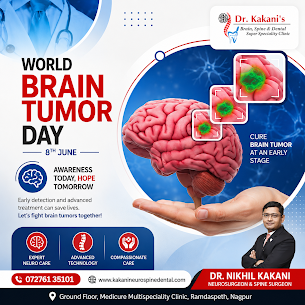
World Brain Tumor Day 2026
Every year, World Brain Tumor Day is observed on 8th June to spread awareness about brain tumors and support patients, survivors, caregivers, and healthcare professionals. The day highlights the importance of recognizing early symptoms, promoting timely diagnosis, and encouraging access to advanced treatment options.
Brain tumors can affect people of all ages. However, early detection and proper medical care significantly improve treatment outcomes and quality of life.
What is a Brain Tumor?
A brain tumor is an abnormal growth of cells inside the brain or surrounding tissues. These tumors may be:
1. Benign Brain Tumors
- Non-cancerous
- Usually grow slowly
- May still cause serious problems due to pressure on the brain
2. Malignant Brain Tumors
- Cancerous
- Grow rapidly
- Can invade nearby brain tissue
Brain tumors can also be classified as primary brain tumors, which originate in the brain, and secondary (metastatic) brain tumors, which spread from other parts of the body.
Why is World Brain Tumor Day Important?
World Brain Tumor Day serves several important purposes:
- Raises awareness about brain tumors.
- Educates people about warning signs.
- Encourages early diagnosis.
- Supports patients and caregivers.
- Promotes research and medical advancements.
Early identification of symptoms often leads to better treatment success and improved survival rates.
Common Symptoms of Brain Tumors
Brain tumor symptoms vary depending on the tumor’s size and location. Some common warning signs include:
Persistent Headaches
Frequent headaches that become more severe over time may require medical evaluation.
Seizures
Sudden seizures without a previous history should never be ignored.
Vision Problems
Blurred vision, double vision, or partial vision loss can occur.
Nausea and Vomiting
Unexplained morning nausea or vomiting may be associated with increased pressure inside the brain.
Memory and Concentration Issues
Difficulty remembering things or focusing on tasks can sometimes indicate neurological problems.
Weakness or Numbness
Weakness in the arms, legs, or one side of the body requires immediate medical attention.
Speech and Balance Problems
Difficulty speaking, understanding language, or maintaining balance may be signs of a brain lesion.
What Causes Brain Tumors?
The exact cause of many brain tumors remains unknown. However, several factors may increase the risk:
- Genetic disorders
- Family history of brain tumors
- Previous radiation exposure
- Increasing age
- Certain inherited syndromes
Most brain tumors develop without any identifiable risk factor.
How are Brain Tumors Diagnosed?
Modern medical technology allows doctors to diagnose brain tumors accurately and quickly.
Neurological Examination
Doctors assess vision, hearing, balance, reflexes, and coordination.
MRI Scan
Magnetic Resonance Imaging (MRI) provides detailed images of the brain and is considered the gold standard for diagnosis.
CT Scan
Computed Tomography (CT) scans help identify tumors, bleeding, or swelling.
PET-CT Scan
PET-CT imaging helps evaluate tumor activity and differentiate between active tumor tissue and treatment-related changes.
Biopsy
A small sample of tumor tissue is examined under a microscope to confirm the diagnosis.
Advanced Treatment Options for Brain Tumors
Treatment depends on the type, size, and location of the tumor.
Brain Tumor Surgery
Neurosurgeons remove as much of the tumor as possible while preserving healthy brain tissue.
Radiation Therapy
High-energy beams destroy cancer cells or prevent them from growing.
Chemotherapy
Special medications help kill cancer cells or slow their growth.
Targeted Therapy
Targeted drugs attack specific molecular changes in tumor cells.
Immunotherapy
This emerging treatment helps the body’s immune system fight cancer more effectively.
Rehabilitation Therapy
After treatment, patients may benefit from physical therapy, speech therapy, and cognitive rehabilitation.
The Importance of Early Detection
Early diagnosis offers many advantages:
- Better treatment planning.
- Higher chances of successful surgery.
- Reduced neurological complications.
- Improved quality of life.
- Better long-term survival rates.
Never ignore persistent neurological symptoms. Consulting a qualified neurosurgeon at an early stage can make a significant difference.
How You Can Support World Brain Tumor Day 2026
You can contribute by:
- Sharing awareness posts on social media.
- Encouraging regular health checkups.
- Supporting brain tumor patients and families.
- Participating in awareness campaigns.
- Donating to brain tumor research organizations.
Together, small efforts can create a significant impact.
Message for World Brain Tumor Day 2026
“Awareness brings hope, and early diagnosis saves lives. On World Brain Tumor Day 2026, let us stand together to support patients, spread knowledge, and fight brain tumors with courage and compassion.”
Frequently Asked Questions (FAQs)
1. When is World Brain Tumor Day observed?
World Brain Tumor Day is observed every year on 8th June.
2. What are the early signs of a brain tumor?
Common early signs include persistent headaches, seizures, vision problems, memory issues, nausea, and weakness.
3. Are all brain tumors cancerous?
No. Brain tumors can be benign (non-cancerous) or malignant (cancerous).
4. Which scan is best for diagnosing a brain tumor?
MRI is generally considered the most effective imaging test for diagnosing brain tumors.
5. Can brain tumors be treated successfully?
Yes. Many brain tumors can be effectively managed with surgery, radiation therapy, chemotherapy, targeted therapy, or a combination of treatments.
6. Why is early diagnosis important?
Early detection improves treatment options, increases survival rates, and helps preserve neurological function.