
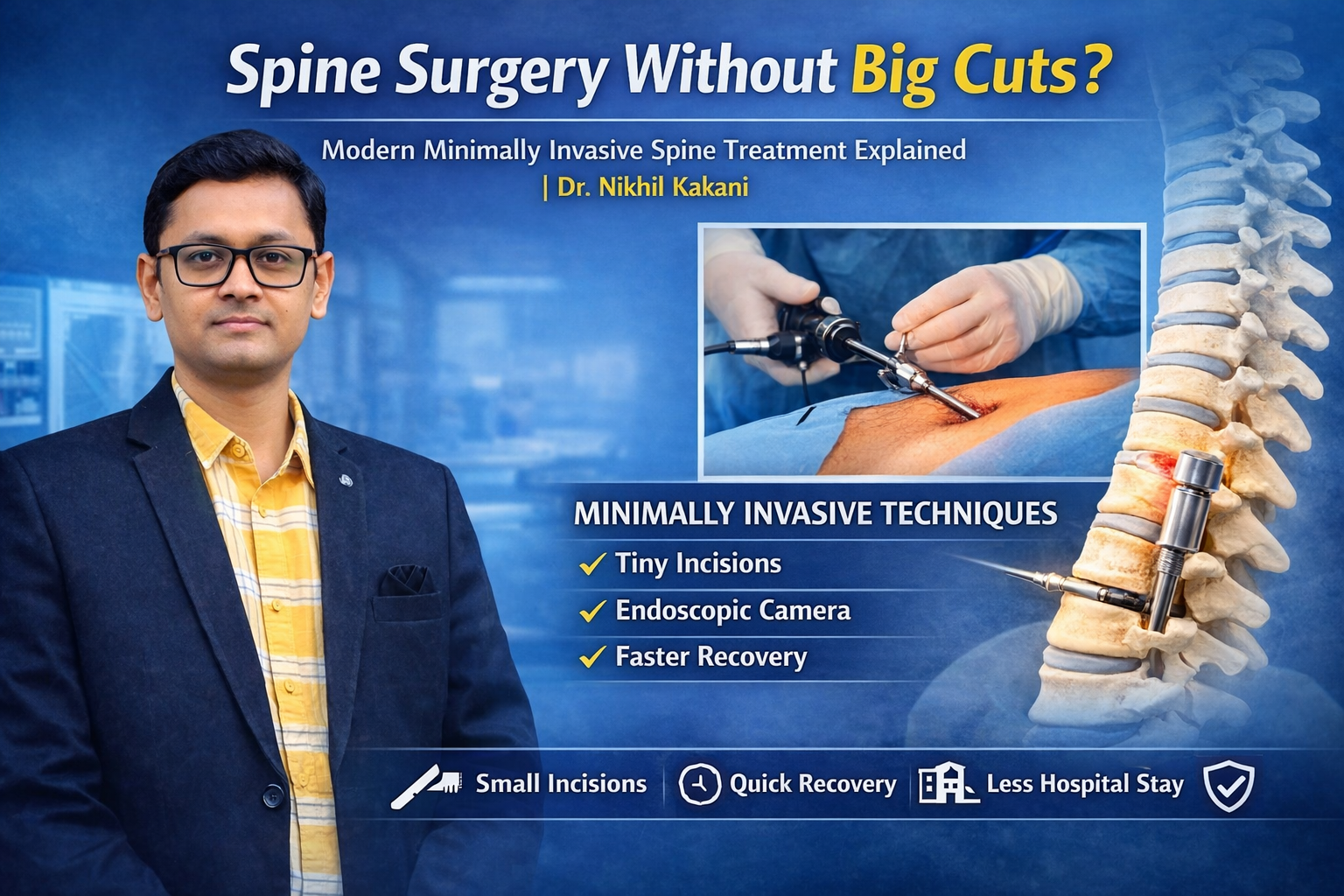
Back pain and spine problems are becoming increasingly common due to sedentary lifestyles, long working hours, and poor posture. Traditionally, spine surgery meant large incisions, long hospital stays, and painful recovery. But today, modern minimally invasive spine surgery (MISS) is changing the game.
If you’re worried about undergoing spine surgery, this blog will help you understand how advanced techniques allow treatment without big cuts, faster healing, and minimal pain.
🔍 What is Minimally Invasive Spine Surgery (MISS)?
Minimally Invasive Spine Surgery is a modern surgical technique that uses:
- Small incisions (often less than 1–2 cm)
- Specialized instruments
- Advanced imaging guidance (like fluoroscopy or endoscopy)
Unlike traditional open surgery, MISS avoids excessive muscle damage, making recovery smoother and quicker.
⚙️ How Does It Work?
Instead of cutting through muscles, surgeons use:
- Tubular retractors to gently separate muscles
- Endoscopic cameras for clear visualization
- Precision tools to treat the affected area
This technique ensures targeted treatment with minimal trauma.
🩻 Conditions Treated with Minimally Invasive Spine Surgery
MISS is highly effective for:
- Herniated Disc (Slip Disc)
- Sciatica (Nerve Compression)
- Spinal Stenosis
- Degenerative Disc Disease
- Spondylolisthesis
- Spine Fractures
🌟 Benefits of Minimally Invasive Spine Surgery
✔️ Smaller Incisions
No big cuts — just tiny entry points
✔️ Less Pain
Reduced tissue damage means less post-operative pain
✔️ Faster Recovery
Patients often resume normal activities quickly
✔️ Minimal Blood Loss
Lower risk during surgery
✔️ Short Hospital Stay
Many cases are done as day-care or 1–2 days admission
✔️ Reduced Infection Risk
Smaller wounds = faster healing
⏱️ Recovery After MISS
Recovery depends on the condition treated, but typically:
- Walking: Within 24 hours
- Return to work: 1–3 weeks
- Full recovery: 4–6 weeks
Compared to traditional surgery, this is significantly faster.
👨⚕️ When Do You Need Spine Surgery?
You may need surgery if:
- Pain persists despite medication and physiotherapy
- Severe nerve compression causes numbness or weakness
- Difficulty in walking or daily activities
- Loss of bladder or bowel control (emergency case)
🧠 Is Minimally Invasive Spine Surgery Safe?
Yes, when performed by an experienced spine specialist like Dr. Nikhil Kakani, MISS is:
- Highly precise
- Clinically proven
- Safe with excellent outcomes
However, not all cases are suitable — proper diagnosis is essential.
📍 Why Choose Modern Spine Treatment?
Choosing advanced techniques ensures:
- Better outcomes
- Less hospital time
- Faster return to normal life
Modern spine care focuses on patient comfort, safety, and quicker recovery.
📝 Conclusion
Spine surgery no longer has to be scary. With minimally invasive techniques, you can now treat spine problems effectively without big cuts, long scars, or prolonged recovery.
If you are suffering from chronic back pain or spine issues, consult a specialist to explore safe and advanced treatment options.