
- September 29, 2026
- DrnikhilK
- 9:45 am
When Back Pain Travels to Your Leg: Understanding Sciatica
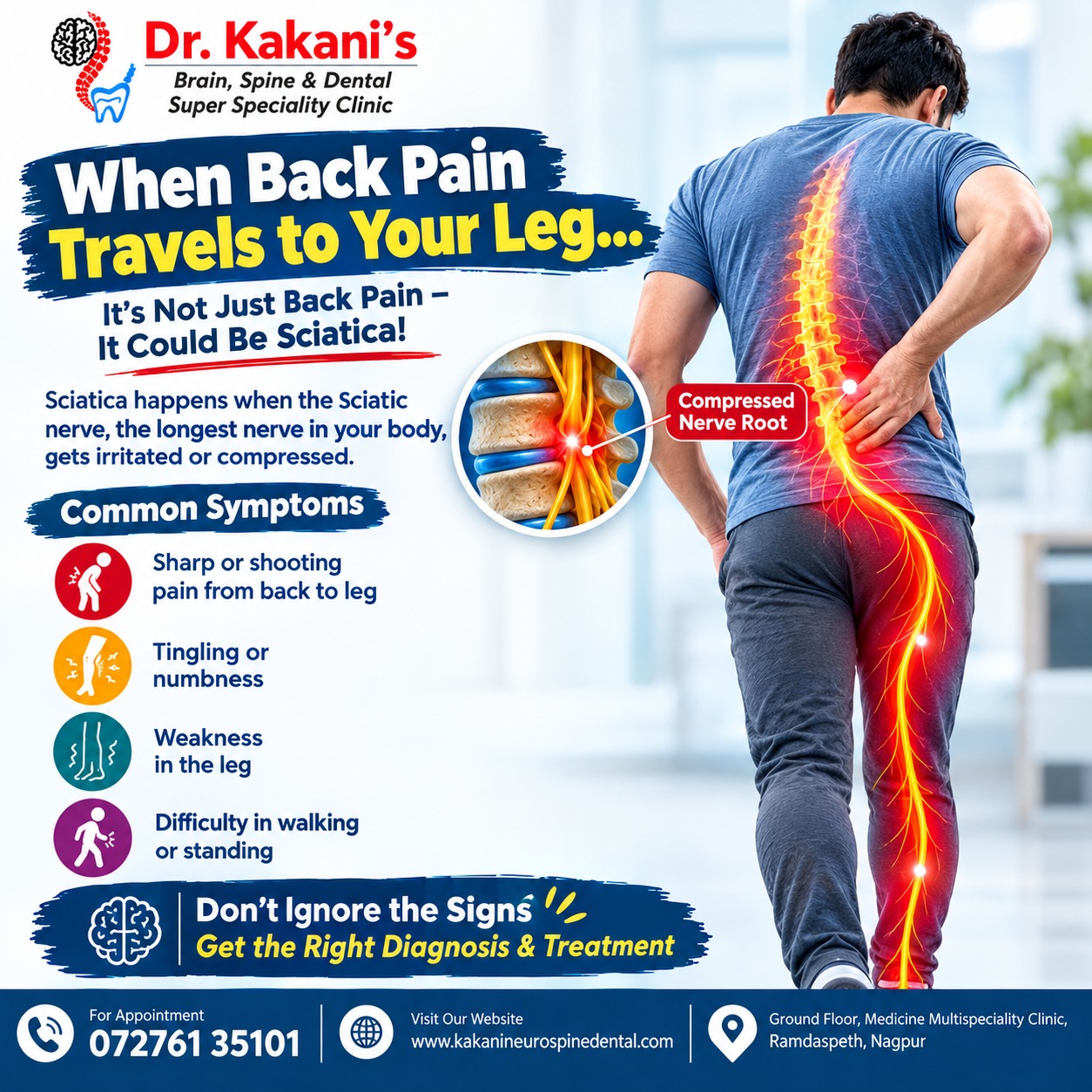
Have you ever experienced a sharp, shooting pain that starts in your lower back and travels down your leg? Do you feel tingling, numbness, or weakness while walking or standing?
These symptoms may be associated with sciatica, a condition that occurs when the sciatic nerve becomes irritated or compressed.
What Is Sciatica?
Common Symptoms of Sciaticauses and Risk Factors
Recognizing the symptoms of sciatica can help you understand when to seek medical attention.
1. Sharp or Shooting Pain
One of the most common symptoms of sciatica is pain that travels from the lower back or buttock down the leg. The pain may feel sharp, electric, or burning.
2. Tingling or Numbness
Some people experience a pins-and-needles sensation or numbness in the buttock, leg, or foot due to nerve irritation.
3. Weakness in the Leg
Compression of a nerve can affect muscle strength, making it difficult to lift the foot, climb stairs, or move the affected leg normally.
4. Difficulty Walking or Standing
Sciatica pain may worsen during prolonged sitting, standing, walking, or certain movements, affecting everyday activities.
What Causes Sciatica?
Sciatica is usually caused by irritation or compression of the nerve roots in the lower spine.
Some common causes include:
Herniated or slipped disc: A spinal disc may bulge or rupture and press against a nearby nerve.
Spinal stenosis: Narrowing of the spinal canal can put pressure on the nerves.
Degenerative disc disease: Age-related changes in the spinal discs may contribute to nerve irritation.
Spondylolisthesis: One vertebra may slip forward over another, potentially compressing a nerve.
Piriformis-related irritation: In some cases, the piriformis muscle in the buttock may contribute to sciatic nerve irritation.
Identifying the underlying cause is important for selecting an appropriate treatment plan.
How Is Sciatica Diagnosed?
A doctor may evaluate sciatica through a combination of medical history, physical examination, and diagnostic tests when needed.
The evaluation may include:
Medical history: Understanding the location, duration, and severity of the pain.
Physical examination: Assessing muscle strength, reflexes, sensation, and movement.
MRI scan: May be recommended when symptoms are severe, persistent, or associated with neurological problems.
Other investigations: Additional tests may be considered depending on the suspected cause.
Not everyone with sciatica requires an MRI or other imaging tests. The need for investigations depends on the symptoms and clinical findings.
Treatment Options for Sciatica
Treatment depends on the underlying cause, symptom severity, and overall health of the patient.
Non-Surgical Treatment
Many cases of sciatica improve with conservative treatment.
Common approaches include:
Physical therapy and guided exercises.
Maintaining gentle physical activity as tolerated.
Avoiding prolonged bed rest.
Medication prescribed by a qualified healthcare professional.
Selected injection-based treatments when clinically appropriate.
Surgical Treatment
Can Sciatica Be Prevented?
Although not all cases of sciatica can be prevented, certain habits may help support spinal health.
Maintain good posture while sitting and standing.
Avoid prolonged sitting without movement breaks.
Stay physically active and exercise regularly within your limits.
Use proper lifting techniques and avoid sudden strain.
Maintain a healthy body weight.
Seek medical advice if back pain persists or is accompanied by leg symptoms.
When Should You Consult a Doctor for Sciatica?
You should consider consulting a healthcare professional if:
Back pain radiates down one or both legs.
Tingling or numbness persists.
Leg pain interferes with daily activities.
You experience difficulty walking or weakness in the leg.
Symptoms do not improve or continue to worsen.
Seek emergency medical care for bladder or bowel control problems, saddle-area numbness, or rapidly progressive weakness.
Consult Dr. Kakani's Clinic for Spine Care in Nagpur
Dr. Kakani’s Brain, Spine & Dental Super Speciality Clinic
Spine care and evaluation for back pain and nerve-related symptoms
Appointment: 07261 35101
Website: www.kakineurospinedental.com
Address: Ground Floor, Medicine Multispeciality Clinic, Ramdaspeth, Nagpur.