- October 1, 2026
- DrnikhilK
- 9:07 am
Occult Spinal Dysraphism: The Hidden Spinal Problem
What Is Occult Spinal Dysraphism?
What Causes Occult Spinal Dysraphism?
Types of Occult Spinal Dysraphism
Occult spinal dysraphism can include several different conditions. Moreover, the exact type determines the symptoms, diagnostic approach, and treatment plan.
Common conditions within the spinal dysraphism spectrum may include:
- Tethered spinal cord
- Spina bifida occulta
- Lipomyelomeningocele
- Lipomeningocele
- Dermal sinus tract
- Certain spinal cord and vertebral developmental abnormalities
Therefore, doctors usually evaluate each child individually rather than treating every case in the same way.
Signs and Symptoms of Occult Spinal Dysraphism
Some children may have no symptoms initially. However, certain skin findings can indicate the need for further evaluation.
Common External Signs
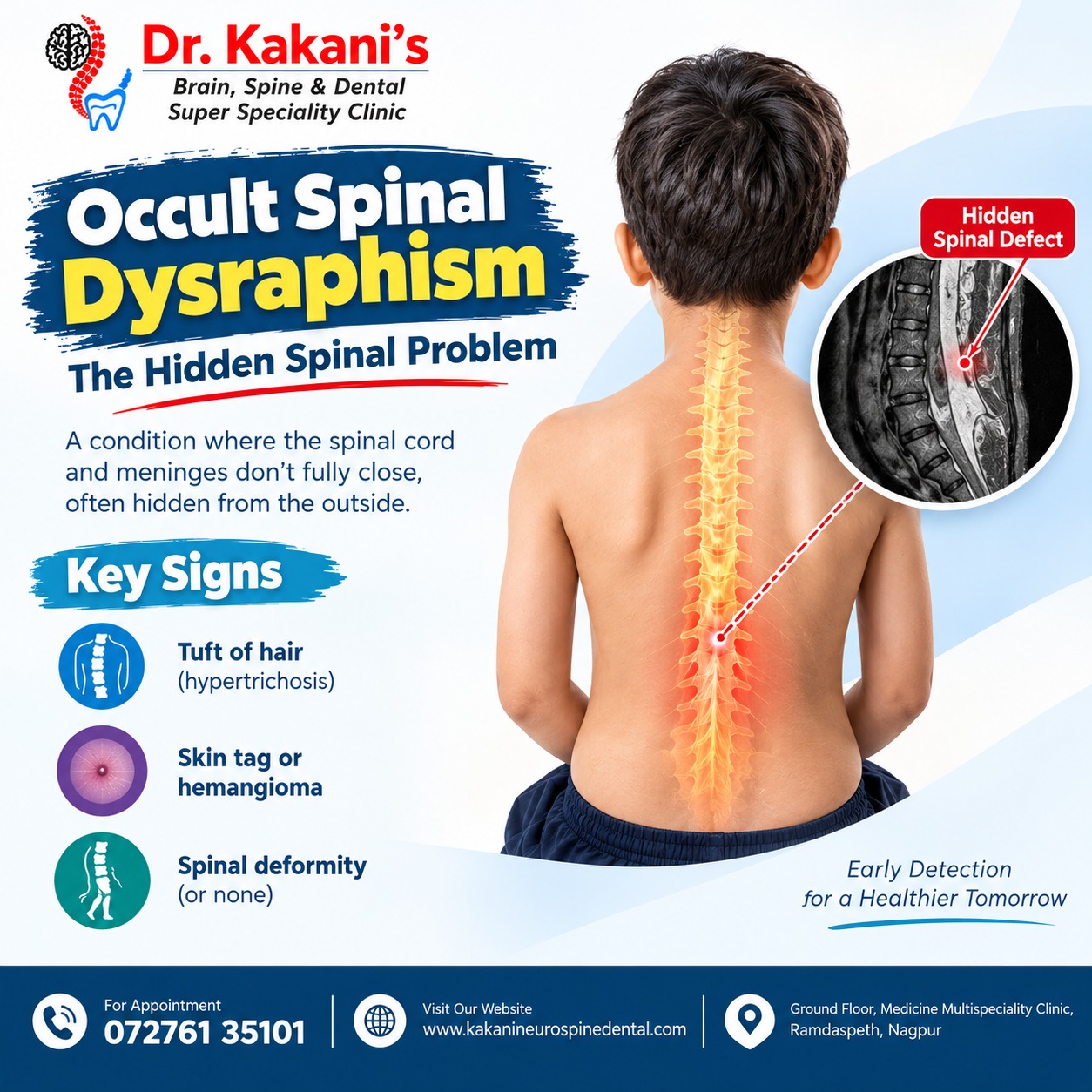
- Tuft of hair: Excess hair over the lower back can sometimes indicate an underlying spinal abnormality.
- Skin tag: A skin tag or small growth near the spine may require medical evaluation.
- Unusual skin mark: A depression, discoloration, or other abnormal skin feature can provide an important clue.
- Hemangioma: A vascular skin lesion may occur over an area of spinal abnormality.
- Spinal deformity: Some children may develop an unusual spinal curve or other structural changes.
In addition, symptoms may include leg weakness, changes in sensation, difficulty walking, bladder or bowel problems, or progressive back and leg symptoms. Therefore, neurological symptoms require timely medical assessment.
How Is Occult Spinal Dysraphism Diagnosed?
Doctors begin with a detailed medical history and physical examination. Moreover, they may examine the child’s back, neurological function, muscle strength, reflexes, walking pattern, and bladder or bowel symptoms.
MRI for Occult Spinal Dysraphism
MRI of the spine can provide detailed images of the spinal cord, nerves, vertebrae, and surrounding soft tissues. Therefore, doctors may recommend MRI when they suspect a hidden spinal abnormality.
In younger children, the doctor may also consider other imaging methods depending on age and the clinical situation. However, the most appropriate investigation depends on the child’s symptoms, age, and examination findings.
Occult Spinal Dysraphism Treatment
Surgical Treatment for Occult Spinal Dysraphism
Benefits of Early Evaluation
Recovery After Treatment
Recovery depends on the child’s condition and the treatment performed. Moreover, the doctor may recommend follow-up examinations to monitor neurological function and spinal development.
After surgery, the medical team provides individualized instructions regarding activity, wound care, medication, and follow-up visits. Therefore, parents should follow the treating specialist’s recommendations and report new or worsening symptoms promptly.
When Should You See a Doctor?
Parents should consider medical evaluation if a child has an unusual mark or structural change over the lower back, particularly when it appears alongside neurological or bladder-related symptoms.
Seek medical attention for symptoms such as:
- New or worsening leg weakness
- Difficulty walking
- Changes in sensation
- Persistent or progressive back or leg symptoms
- New bladder or bowel control problems
- Significant spinal deformity
- A concerning skin abnormality over the spine
Therefore, early consultation with an appropriate pediatric spine or neurosurgical specialist can help determine whether further investigation is necessary.