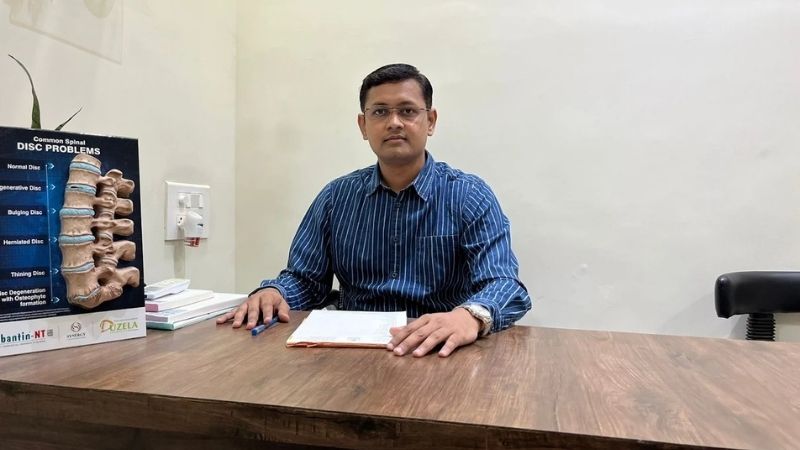
Dr. Kakani's Brain Spine and Dental Super Speciality Clinic

My father suffered brain stroke few days ago, we immediately rushed to dr kakani sir, he treated him with medicines, now he is doing good and improved very well.
Thank you sir for timely treatment

Tara Atlami
27. February, 2026.
Dr. Nikhil Kakani Sir is an excellent doctor. I had a fracture injury, and with his proper diagnosis and medication, my recovery was very good. He explained everything clearly and treated me with great care and patience. I am very satisfied with the treatment and truly thankful for his support. I highly recommend Dr. Nikhil Kokani to anyone with fracture or injury problems.
Rajshri Sahu
27. February, 2026.
I recently had a three-level cervical spine surgery performed by Dr. Nikhil Kakani, and I’m truly grateful for his outstanding care. Before surgery, I struggled with severe neck pain and cervical radiculopathy symptoms. Today, I’m completely pain-free and back to normal life.
Dr. Nikhil Kakani, explained everything clearly, guided me with confidence, and ensured a smooth recovery. His skill and professionalism made all the difference.
Highly recommend him to anyone dealing with neck or spine issues. Thank you, doctor!
Venkatesh Maggidwar
27. February, 2026.
Dr. Kakani sir treated the my son head injury. After that treatment the my son is recovered and now is good.
Neurological treatment of Doctor is very good and Doctor listening the patient properly.
Experienced Doctor in Nagpur.
Ghanshyam Naitam
27. February, 2026.
I had severe back pain for almost two months, and I was advised surgery by another doctor. I was very worried before meeting Dr. Kakani. He listened patiently, explained the problem clearly, and treated me without surgery. His diagnosis and treatment were excellent, and today I feel completely cured. Dr. Kakani is highly knowledgeable, calm, and truly cares about his patients. I strongly recommend him.
Ashok Mahadule
27. February, 2026.
I am very thankful to the doctor and his entire staff. I called at around 10:30 pm to take an appointment, and they gave me the next day 11:00 am appointment without any issue. The doctor had to go out at 12:00 pm, but still he waited for the patient, even though our train was late by almost one hour.
Not only this, my relative has a very serious injury which could be risky and may even lead to paralysis in the future. The patient was not ready to get admitted, but the doctor personally called me and clearly explained how serious the condition is and what risks may happen in the future.
This shows the doctor’s dedication, responsibility, and genuine care for patients. Truly grateful for such a supportive and professional doctor and staff. Highly recommended.
Poonam Patel
27. February, 2026.