- October 8, 2026
- DrnikhilK
- 7:08 am
Minimally Invasive Brain Tumor Surgery: Advanced Treatment for Brain Tumors
What Is Minimally Invasive Brain Tumor Surgery?
When Is Minimally Invasive Brain Tumor Surgery Recommended?
A neurosurgeon may consider minimally invasive surgery when the tumor’s location, size, and characteristics make the approach appropriate. However, not every brain tumor can undergo a minimally invasive procedure.
The surgical team may consider factors such as:
- Tumor size and location
- Tumor type and grade
- Symptoms caused by the tumor
- Pressure on surrounding brain structures
- Relationship with important blood vessels or nerves
- Patient’s overall health
- Previous brain surgery or treatment
In addition, doctors may recommend surgery to obtain a tissue sample for diagnosis, reduce tumor pressure, or remove as much tumor as safely possible.
How Is Minimally Invasive Brain Tumor Surgery Performed?
Advanced Technology Used During Brain Tumor Surgery
Modern neurosurgery combines surgical expertise with advanced technology to improve precision. Depending on the patient’s condition, the surgical team may use:
- MRI and CT imaging
- Image-guided neuronavigation
- Surgical microscopes
- Endoscopic equipment
- Intraoperative neurophysiological monitoring
- Functional brain mapping
- Advanced surgical instruments
Moreover, these technologies can help the surgeon understand the tumor’s position and its relationship with important brain structures.
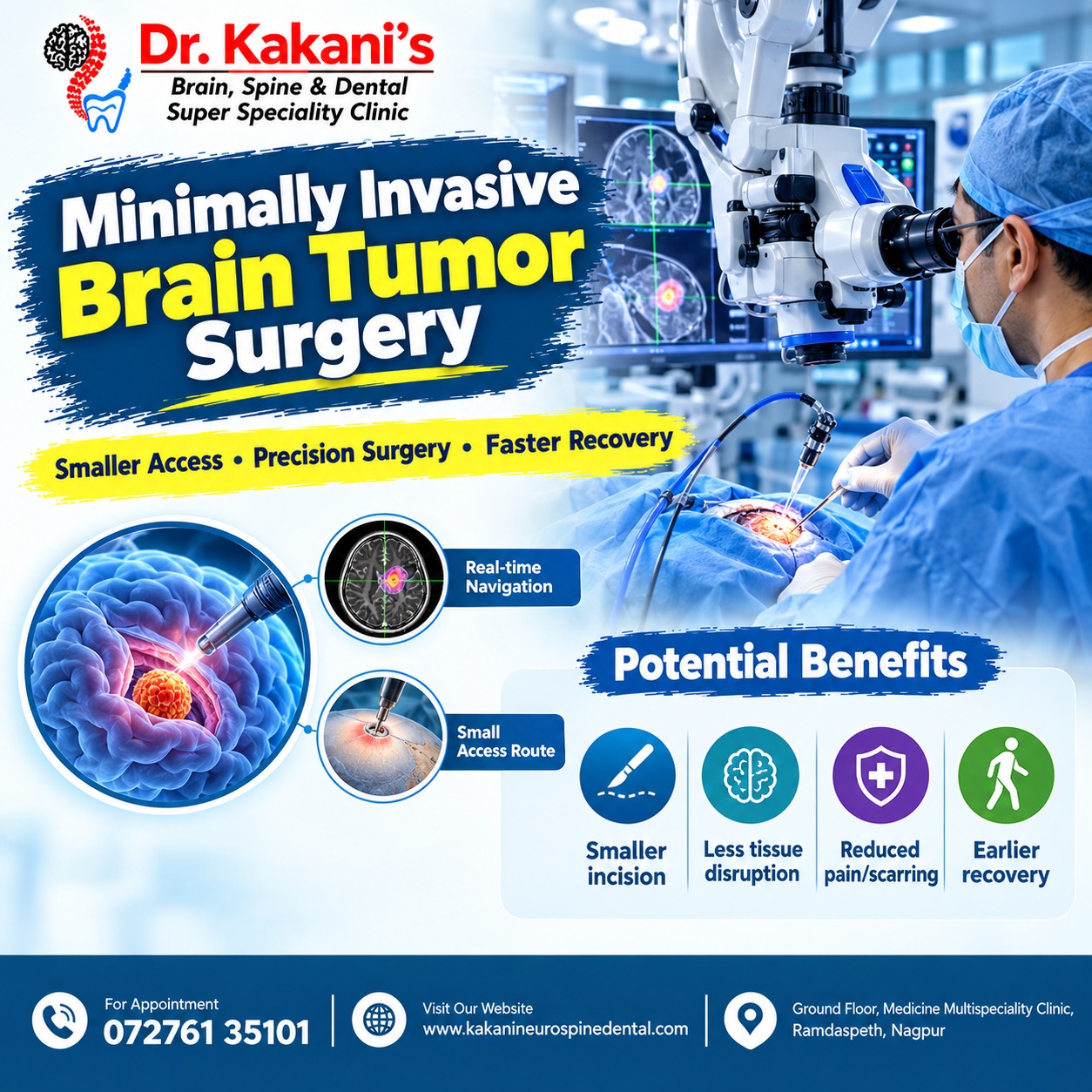
Benefits of Minimally Invasive Brain Tumor Surgery
Minimally invasive approaches may offer several potential benefits when the technique suits the tumor and patient. These may include:
- Smaller surgical access
- Reduced disruption of
- surrounding tissues
- Less postoperative discomfort in some cases
- Potentially shorter hospital recovery
- Faster return to routine activities for selected patients
- Improved surgical precision
However, outcomes depend on several factors, including tumor type, location, size, surgical complexity, and the patient’s overall health. Therefore, patients should discuss expected benefits and risks with their neurosurgeon.
Recovery After Minimally Invasive Brain Tumor Surgery
Recovery varies according to the type of surgery and the patient’s condition. After the procedure, the medical team closely monitors neurological function and overall recovery.
Moreover, some patients may return to normal activities relatively quickly, while others may require additional recovery time or rehabilitation. Physiotherapy, occupational therapy, speech therapy, or other rehabilitation services may help patients manage specific neurological difficulties when needed.
Therefore, following postoperative instructions and attending scheduled follow-up appointments remain important parts of recovery.
Risks and Possible Complications
Although minimally invasive techniques can reduce tissue disruption in appropriate cases, brain surgery still carries potential risks. These risks may include bleeding, infection, swelling, seizures, neurological changes, blood clots, or complications related to anesthesia.
In addition, the risks depend strongly on the tumor’s location and the structures involved. Therefore, the neurosurgeon should explain the expected benefits, limitations, and possible complications before surgery.
Why Choose an Experienced Neurosurgical Team?
Brain tumor surgery requires detailed planning, specialized expertise, and access to appropriate technology. Moreover, an experienced neurosurgical team can assess the tumor and select the most suitable treatment approach for each patient.
The treatment plan may include surgery, radiation therapy, chemotherapy, targeted treatment, or a combination of approaches depending on the tumor diagnosis. Therefore, patients should seek a detailed evaluation before deciding on treatment.
When Should You Consult a Neurosurgeon?
Persistent or worsening neurological symptoms require medical evaluation. These symptoms may include:
- Frequent or severe headaches
- Seizures
- Vision changes
- Balance or coordination problems
- Weakness or numbness
- Speech difficulties
- Memory or personality changes
- Persistent nausea or vomiting
However, these symptoms can occur due to many different conditions and do not automatically indicate a brain tumor. Therefore, a qualified doctor should evaluate the symptoms and recommend appropriate investigations.
Consult Dr. Kakani's Clinic
Dr. Kakani’s Brain, Spine & Dental Super Speciality Clinic
Appointment: 07261 35101
Website: www.kakineurospinedental.com
Address: Ground Floor, Medicine Multispeciality Clinic, Ramdaspeth, Nagpur.