
- October 31, 2026
- DrnikhilK
- 9:44 am
What Is Microsurgery for Brain Tumors?
Why Does Precision Matter in Brain Tumor Surgery?
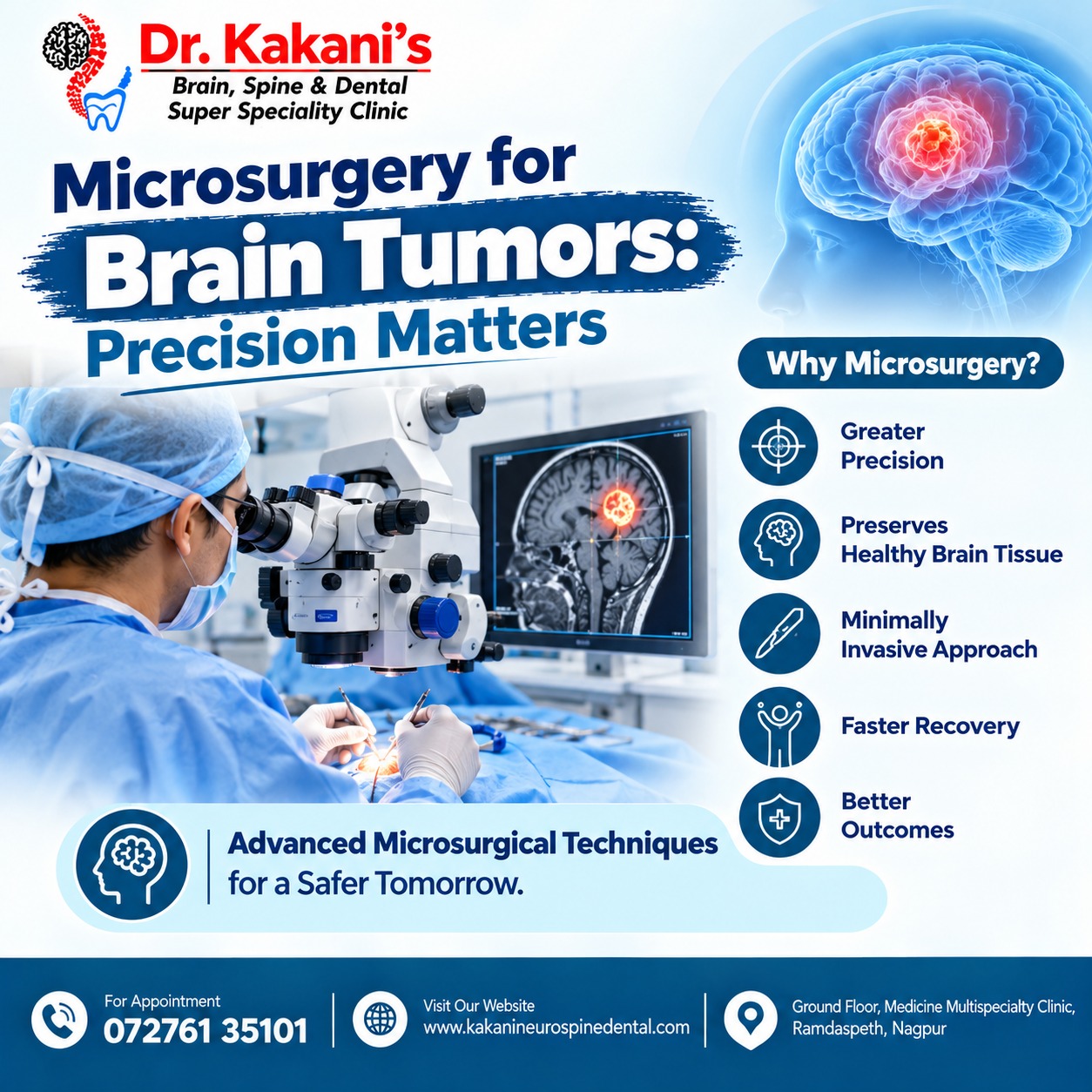
The brain controls essential body functions, so even small surgical changes can affect a patient’s quality of life. Therefore, precision plays an important role during brain tumor removal.
Key benefits of precision-focused surgery include:
Protecting Healthy Brain Tissue: Helps surgeons avoid unnecessary damage to surrounding structures.
Identifying Tumor Boundaries: Provides better visualization during tumor removal.
Preserving Important Functions: Supports careful planning around areas responsible for speech, movement and vision.
Controlling Bleeding: Helps surgeons identify and manage small blood vessels.
Supporting Better Outcomes: Aims to achieve the safest possible tumor removal based on the tumor’s location and type.
How Does Brain Tumor Microsurgery Work?
Brain tumor microsurgery involves several carefully planned steps. However, the exact procedure depends on the tumor’s size, location and nature.
Preoperative Evaluation: MRI and other diagnostic tests help identify the tumor’s location and characteristics.
Surgical Planning: The neurosurgeon studies nearby critical brain structures and plans the safest surgical approach.
Microscope-Assisted Surgery: A specialized microscope provides magnified visualization of the operating area.
Tumor Removal: The surgeon carefully removes as much of the tumor as safely possible.
Postoperative Monitoring: The medical team monitors the patient’s neurological condition and recovery.
Who May Need Microsurgery for Brain Tumors?
Doctors may recommend brain tumor microsurgery for patients with different types of brain tumors, depending on their clinical condition.
These may include:
Meningiomas
Gliomas
Glioblastomas
Brain metastases
Pituitary region tumors
Other surgically accessible brain tumors
However, not every brain tumor requires surgery. Treatment decisions depend on the diagnosis, tumor location, symptoms and overall health.
Recovery After Brain Tumor Microsurgery
Recovery varies from patient to patient. Moreover, factors such as tumor size, surgical complexity and the patient’s overall health influence recovery time.
Patients may require:
Regular neurological examinations
Follow-up MRI scans
Medication as prescribed
Physiotherapy or rehabilitation when needed
Additional treatments such as radiation or chemotherapy, depending on the diagnosis
Therefore, following the neurosurgeon’s instructions and attending scheduled follow-up appointments are important.
Why Choose an Experienced Neurosurgeon?
Brain tumor surgery requires specialized training, experience and careful surgical judgment. An experienced neurosurgeon evaluates the tumor’s relationship with important brain structures and selects an appropriate surgical technique.
Furthermore, advanced imaging, operating microscopes and neuromonitoring techniques can support safer surgical planning when clinically appropriate.
Conclusion
Consult Dr. Kakani's Clinic
Dr. Kakani’s Brain, Spine & Dental Super Speciality Clinic
Appointment: 07261 35101
Website: www.kakineurospinedental.com
Address: Ground Floor, Medicine Multispeciality Clinic, Ramdaspeth, Nagpur.