Experienced Neurosurgeon In Nagpur – Dr. Kakani’s Brain Spine & Dental Super Speciality Clinic
When patients search for an Experienced Neurosurgeon In Nagpur, they are typically facing complex brain or spine conditions that require technical precision and informed clinical judgment. Therefore, selecting a neurosurgeon with structured training, surgical expertise, and evidence-based practice becomes essential. At Dr. Kakani’s Brain Spine & Dental Super Speciality Clinic, neurological care is delivered through systematic diagnosis, advanced surgical planning, and outcome-focused treatment protocols.
Because neurosurgery involves delicate brain and spinal structures, experience directly influences safety and long-term recovery. Consequently, patients benefit from refined surgical techniques, reduced complication rates, and optimized rehabilitation strategies. Moreover, individualized treatment planning ensures that each case receives condition-specific intervention rather than standardized management.
Who Is Dr. Nikhil Kakani?
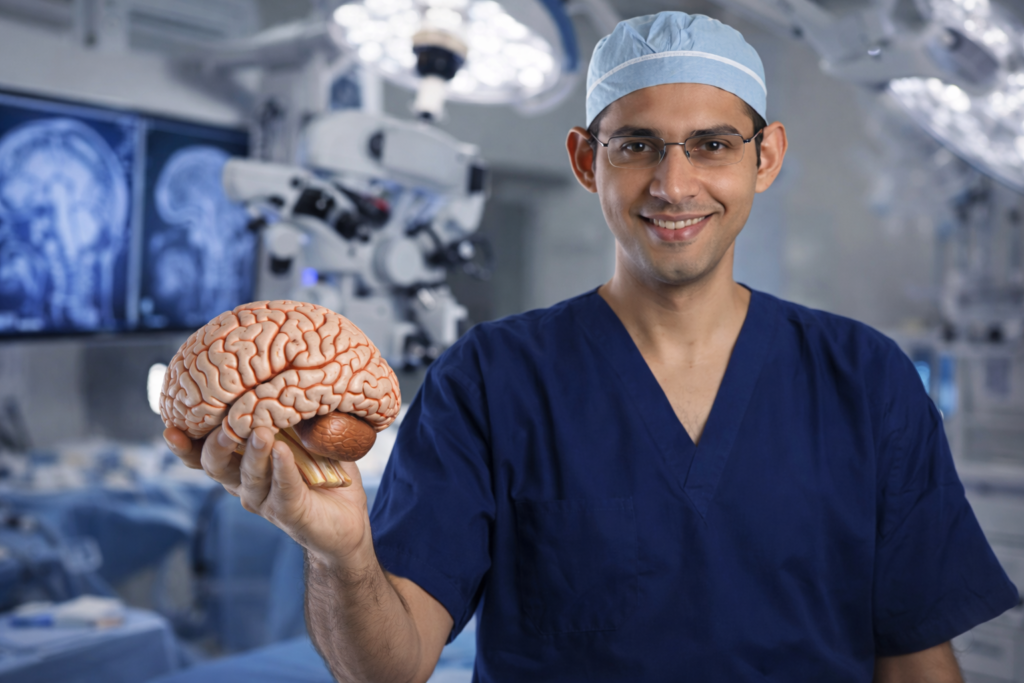
First, let’s clarify who Dr. Nikhil Kakani is because his credentials define trust and capability. Dr. Kakani is a board‑certified neurosurgeon with advanced training, extensive surgical experience, and a strong commitment to patient outcomes. As a specialist, he has worked on diverse neurological conditions ranging from brain tumors and spinal disorders to trauma cases and peripheral nerve injuries.
Transitioning from training to practice, Dr. Kakani earned recognition both for his technical proficiency and for patient‑centered communication. Consequently, his clinic has become synonymous with consistency, integrity, and surgical excellence.
Qualifications and Training
Medical Degree (MBBS)
- MS in General Surgery
- MCh in Neurosurgery
- Advanced fellowship exposure in spine surgery and neurotrauma
Continuous professional development through conferences and workshops
In addition, Dr. Kakani stays updated with global neurosurgical advancements. As a result, he blends evidence‑based techniques with compassionate patient engagement — a combination that improves recovery and patient satisfaction.
Comprehensive Expertise in Brain and Spine Surgery
An experienced neurosurgeon must address both cranial and spinal pathologies; therefore, the scope of practice extends across multiple neurological domains. At this center, conditions such as brain tumors, hydrocephalus, traumatic brain injuries, brain hemorrhage, disc prolapse, spinal stenosis, and spinal cord injuries are managed systematically. Consequently, patients receive integrated care under one roof.
Furthermore, precise neurological evaluation precedes every intervention. As a result, surgical decisions are based on objective imaging findings and clinical assessment rather than assumptions. In addition, minimally invasive approaches are prioritized whenever feasible. Therefore, tissue trauma is minimized while surgical accuracy remains high.
Because neurological disorders vary in complexity, broad expertise ensures adaptability across diverse clinical scenarios.
Advanced Surgical Techniques and Modern Infrastructure
Modern neurosurgery depends on technological precision; therefore, advanced imaging and microsurgical tools are essential components of high-quality care. At Dr. Kakani’s Brain Spine & Dental Super Speciality Clinic, high-resolution MRI and CT imaging guide preoperative planning. Consequently, surgical navigation becomes more accurate.
Moreover, minimally invasive spine procedures such as microdiscectomy and endoscopic decompression reduce muscle damage and postoperative pain. As a result, patients recover faster compared to conventional open surgery. In addition, microsurgical techniques enhance visualization of delicate neural structures. Therefore, complication rates decline while functional outcomes improve.
Because infrastructure supports surgical precision, the integration of technology strengthens overall treatment reliability.
Patient-Centered and Ethical Treatment Approach
Experience alone is insufficient without ethical medical practice; therefore, treatment decisions are based strictly on clinical necessity. Conservative management is recommended when surgery is not required. Consequently, unnecessary procedures are avoided.
Furthermore, detailed preoperative counseling ensures that patients understand risks, benefits, and recovery timelines. As a result, decision-making remains transparent and informed. In addition, postoperative follow-up appointments monitor neurological recovery and detect early complications. Therefore, care continuity extends beyond the operating room.
Because trust forms the foundation of neurosurgical care, transparent communication strengthens patient confidence throughout treatment.
Management of Neurological Emergencies
An experienced neurosurgeon must respond effectively to emergencies; therefore, structured protocols are implemented for head injuries, stroke, brain hemorrhage, and spinal trauma. Rapid stabilization, urgent imaging, and timely surgical intervention significantly improve survival outcomes. Consequently, neurological deterioration is minimized.
Moreover, postoperative ICU monitoring ensures early detection of complications such as swelling or re-bleeding. As a result, critical patients receive uninterrupted supervision. In addition, coordinated teamwork among anesthesiologists and critical care specialists enhances overall safety. Therefore, emergency management remains systematic and efficient.
Because neurological crises evolve rapidly, experience enables confident and timely clinical decision-making.
Rehabilitation and Long-Term Neurological Care
Effective neurosurgical treatment extends beyond surgery; therefore, structured rehabilitation plays a central role in recovery. Physiotherapy programs focus on strength restoration, coordination improvement, and pain reduction. Consequently, functional independence improves steadily.
Moreover, long-term follow-up assessments evaluate neurological progress and spinal alignment. As a result, recurrence or delayed complications are addressed early. In addition, lifestyle guidance regarding posture, physical activity, and preventive care supports sustained spinal and brain health. Therefore, recovery becomes durable rather than temporary.
Because neurological healing requires sustained support, comprehensive follow-up care enhances overall outcomes.
Why Choose an Experienced Neurosurgeon In Nagpur
Selecting an experienced neurosurgeon requires evaluating clinical expertise, surgical precision, emergency readiness, and ethical practice standards. Dr. Kakani’s Brain Spine & Dental Super Speciality Clinic integrates advanced diagnostics, minimally invasive surgical capability, structured ICU monitoring, and rehabilitation planning. Consequently, patients receive comprehensive neurological management from diagnosis to recovery.
Moreover, individualized treatment planning ensures that each patient’s condition is addressed with accuracy and care. As a result, surgical risks are minimized while functional restoration is prioritized. Therefore, patients seeking a dependable Experienced Neurosurgeon In Nagpur benefit from systematic, technology-driven, and patient-focused neurological treatment.
Patient‑Centric Approach
Beyond clinical capability, Dr. Kakani emphasizes clear communication, patient education, and shared decision‑making. From initial consultation to long‑term follow‑up, the clinic prioritizes transparency and explanation.
Here’s how the clinic supports patients:
- Detailed explanation of condition and treatment options
- Clear guidance on risks, benefits, and potential outcomes
- Personalized rehabilitation plans
- Follow‑up scheduling and monitoring
Because nervous system conditions can cause anxiety, this supportive framework makes a tangible difference in patient experience.
Specialized Management of Brain Tumors and Complex Cranial Conditions
Brain tumors and complex cranial pathologies require refined surgical judgment; therefore, management begins with comprehensive neuroimaging and functional assessment. At Dr. Kakani’s Brain Spine & Dental Super Speciality Clinic, MRI-based evaluation determines tumor size, location, vascular involvement, and surrounding tissue impact. Consequently, surgical planning becomes highly targeted and risk-aware.
Moreover, whenever feasible, microsurgical techniques are utilized to maximize tumor removal while preserving healthy brain tissue. As a result, neurological function such as speech, vision, and motor coordination is protected. In addition, postoperative monitoring ensures early detection of swelling or recurrence. Therefore, patients benefit from a structured cranial care pathway that balances aggressive treatment with functional preservation.
Because cranial surgery demands extreme precision, experienced execution significantly improves both survival and quality-of-life outcomes.
Advanced Spine Deformity and Degenerative Disorder Correction
Degenerative spine disease and deformities such as scoliosis or spondylolisthesis often progress gradually; therefore, early specialist evaluation prevents long-term complications. At this center, structural alignment, disc integrity, and nerve compression are carefully assessed using imaging and clinical examination. Consequently, treatment plans address both mechanical instability and neurological symptoms.
Furthermore, corrective procedures restore spinal alignment while relieving nerve pressure. As a result, chronic pain, numbness, and mobility limitations improve substantially. In addition, minimally invasive stabilization methods reduce postoperative discomfort. Therefore, recovery timelines shorten without compromising structural correction.
Because degenerative spine disorders can severely limit daily activity, precise surgical intervention restores both mobility and independence.
Research-Based Clinical Protocols and Continuous Skill Advancement
Neurosurgery evolves rapidly; therefore, adherence to updated clinical guidelines remains essential. At Dr. Kakani’s Brain Spine & Dental Super Speciality Clinic, treatment protocols align with contemporary neurosurgical standards. Consequently, patients receive care that reflects current evidence rather than outdated practice.
Moreover, continuous professional development and technical refinement enhance surgical precision. As a result, complication rates decrease while success rates improve. In addition, standardized checklists and quality monitoring systems maintain procedural consistency. Therefore, patient safety and treatment reliability remain central priorities.
Because neurological treatment demands ongoing refinement, commitment to evolving medical knowledge strengthens clinical excellence.
Long-Term Neurological Monitoring and Preventive Strategies
Effective neurosurgical care extends beyond immediate treatment; therefore, long-term monitoring becomes essential for sustained wellness. Regular follow-up consultations assess neurological reflexes, imaging results, and functional recovery progress. Consequently, early signs of recurrence or degeneration are addressed promptly.
Furthermore, preventive strategies such as posture correction, ergonomic advice, and strengthening exercises reduce recurrence of spine disorders. As a result, patients maintain stability long after surgery. In addition, medication management and lifestyle counseling support vascular and neurological health. Therefore, comprehensive follow-up transforms acute treatment into lasting recovery.
Because prevention reduces the likelihood of repeat intervention, structured monitoring strengthens overall health outcomes.
How to Book a Consultation
Call for Appointment: +91‑72761‑35101
Visit Clinic: Ramdaspeth, Nagpur, Maharashtra, India
During the first visit, patients are advised to bring relevant medical records, imaging studies, and a list of symptoms. This preparation helps the neurosurgical team evaluate conditions efficiently and plan next steps without delay.
Conclusion
FAQs – Experienced Neurosurgeon In Nagpur
1. When should I consult an experienced neurosurgeon?
You should consult a neurosurgeon if you experience persistent back or neck pain, seizures, severe headaches, limb weakness, numbness, or symptoms following head or spine trauma.
2. Are all brain tumors treated surgically?
Not always. Treatment depends on tumor type, size, and location; therefore, some cases require surgery while others may need monitoring or additional therapies.
3. Is spine surgery always necessary for disc problems?
No. Conservative treatment is often effective; however, surgery is recommended when nerve compression causes severe pain or neurological deficits.
4. How long does recovery take after neurosurgery?
Recovery varies depending on the procedure and patient condition; however, minimally invasive techniques generally shorten hospitalization and rehabilitation time.
5. Are emergency neurosurgical services available?
Yes. Emergency management for head injuries, stroke, and spinal trauma is provided with structured protocols and ICU monitoring.
6. What makes an experienced neurosurgeon different?
Experience enhances diagnostic accuracy, surgical precision, complication management, and long-term recovery planning.
7. Is follow-up care necessary after surgery?
Yes. Regular follow-up ensures proper healing, detects complications early, and supports sustained neurological function.