- October 31, 2026
- DrnikhilK
- 9:50 am
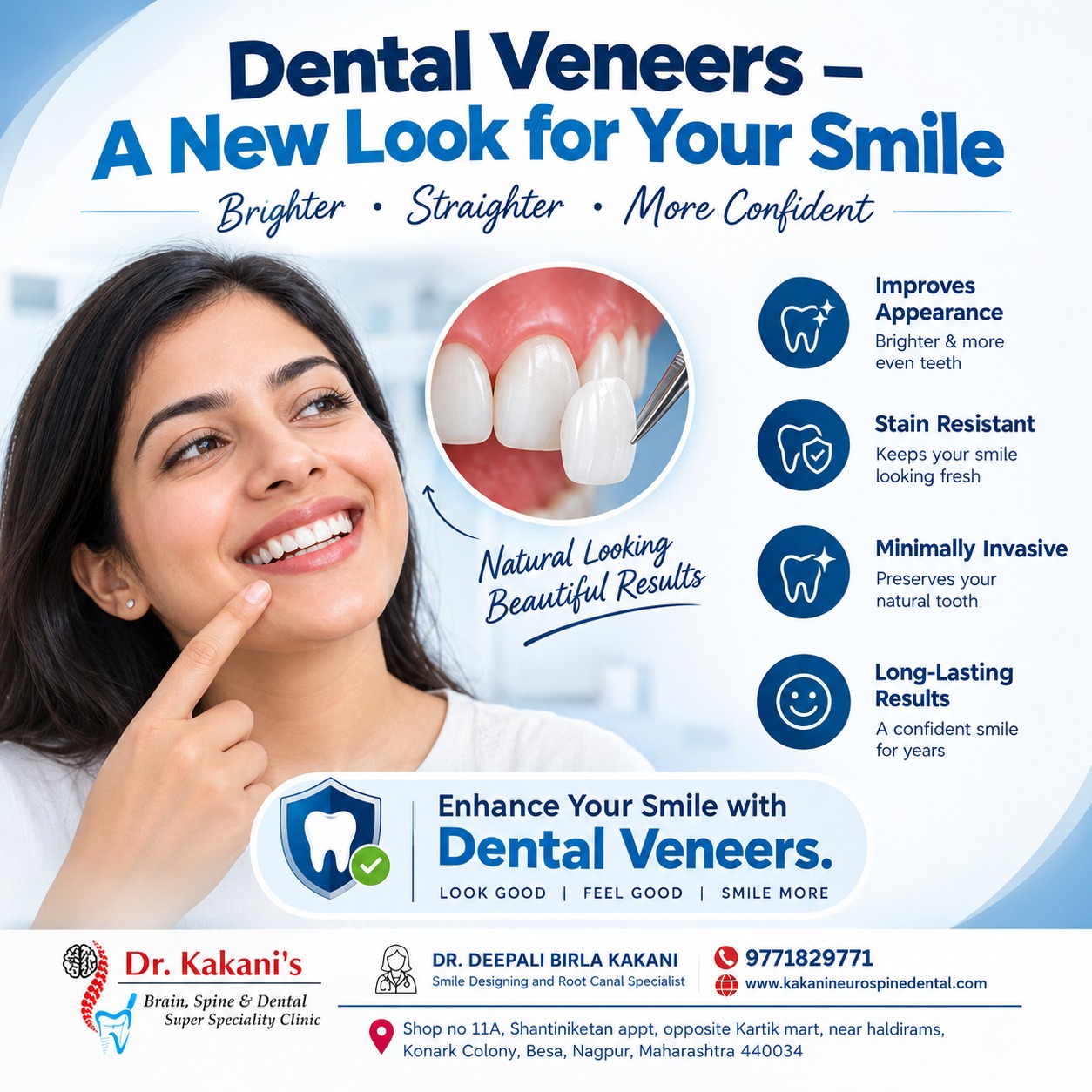
What Are Dental Veneers?
Why Do You Need Dental Veneers?
Several dental concerns can affect your smile and confidence. Dental veneers help improve many common cosmetic issues, including:
Stained or Discoloured Teeth: Cover stubborn stains that do not respond well to teeth whitening.
Chipped Teeth: Restore the appearance of chipped or slightly damaged teeth.
Uneven Teeth: Create a more uniform and balanced smile.
Small Gaps: Close minor spaces between teeth.
Irregular Tooth Shape: Improve the size, shape, and overall appearance of teeth.
Worn Teeth: Enhance the appearance of teeth affected by mild wear.
Therefore, dental veneers can help create a more symmetrical and attractive smile.
Types of Dental Veneers
Dentists generally recommend different types of veneers based on individual dental needs.
1. Porcelain Veneers
Porcelain veneers are thin, durable shells made from high-quality dental ceramic. They closely resemble natural tooth enamel and resist stains. Additionally, they provide a long-lasting cosmetic solution when patients maintain proper oral hygiene.
2. Composite Veneers
Composite veneers use tooth-coloured resin material to improve the appearance of teeth. Dentists can often apply them in a shorter treatment process. However, composite veneers may require more maintenance and repairs than porcelain veneers.
How Does the Dental Veneers Procedure Work?
The dental veneer treatment involves several steps to achieve a natural-looking result.
Step 1: Initial Dental Consultation
First, your dentist examines your teeth, gums, bite, and overall oral health. The dentist also discusses your smile goals and determines whether veneers suit your condition.
Step 2: Tooth Preparation
Next, the dentist may remove a small amount of enamel from the front surface of the teeth to create space for the veneers. The preparation depends on the selected veneer type and your dental requirements.
Step 3: Dental Impressions
The dentist takes impressions or digital scans of your teeth. These measurements help create customised veneers that fit your teeth properly.
Step 4: Veneer Placement
Finally, the dentist checks the fit, shape, and colour of the veneers before bonding them to your teeth using dental adhesive.
Benefits of Dental Veneers
Dental veneers offer several cosmetic benefits for people who want to improve their smiles.
Improve tooth colour and brightness.
Enhance the shape and size of teeth.
Cover minor chips and imperfections.
Create a more uniform smile.
Provide natural-looking cosmetic results.
Boost confidence while smiling and speaking.
However, the results and longevity depend on the veneer material, dental condition, and daily oral care.
How to Care for Your Dental Veneers
Proper care helps maintain the appearance and durability of dental veneers. Follow these simple recommendations:
Brush twice daily with a soft-bristled toothbrush.
Floss regularly to maintain healthy gums.
Avoid biting hard objects such as ice and hard nuts.
Limit foods and drinks that can stain natural teeth or composite veneers.
Avoid using your teeth to open packages.
Visit your dentist regularly for check-ups and cleaning.
Consider a night guard if you grind or clench your teeth.
Are Dental Veneers Right for You?
Dental veneers may suit individuals who want to correct cosmetic dental imperfections and improve their smile. However, healthy teeth and gums are important before starting treatment. Patients with untreated tooth decay, gum disease, or severe teeth grinding may need additional treatment first.
Therefore, consult a qualified dentist to understand your options and choose the right cosmetic dental treatment.
Get a Beautiful New Look for Your Smile with Dr. Deepali Kakani
Consult Dr. Kakani's Clinic
Dr. Kakani’s Brain, Spine & Dental Super Speciality Clinic
Appointment: 07261 35101
Website: www.kakineurospinedental.com
Address: Ground Floor, Medicine Multispeciality Clinic, Ramdaspeth, Nagpur.