- November 21, 2026
- DrnikhilK
- 7:09 am
Deep Tooth Decay? Don't Ignore the Warning Signs!
What Is Deep Tooth Decay?
7 Warning Signs of Deep Tooth Decay You Should Never Ignore
Recognising the early symptoms of deep tooth decay can help you seek treatment before the condition becomes serious.
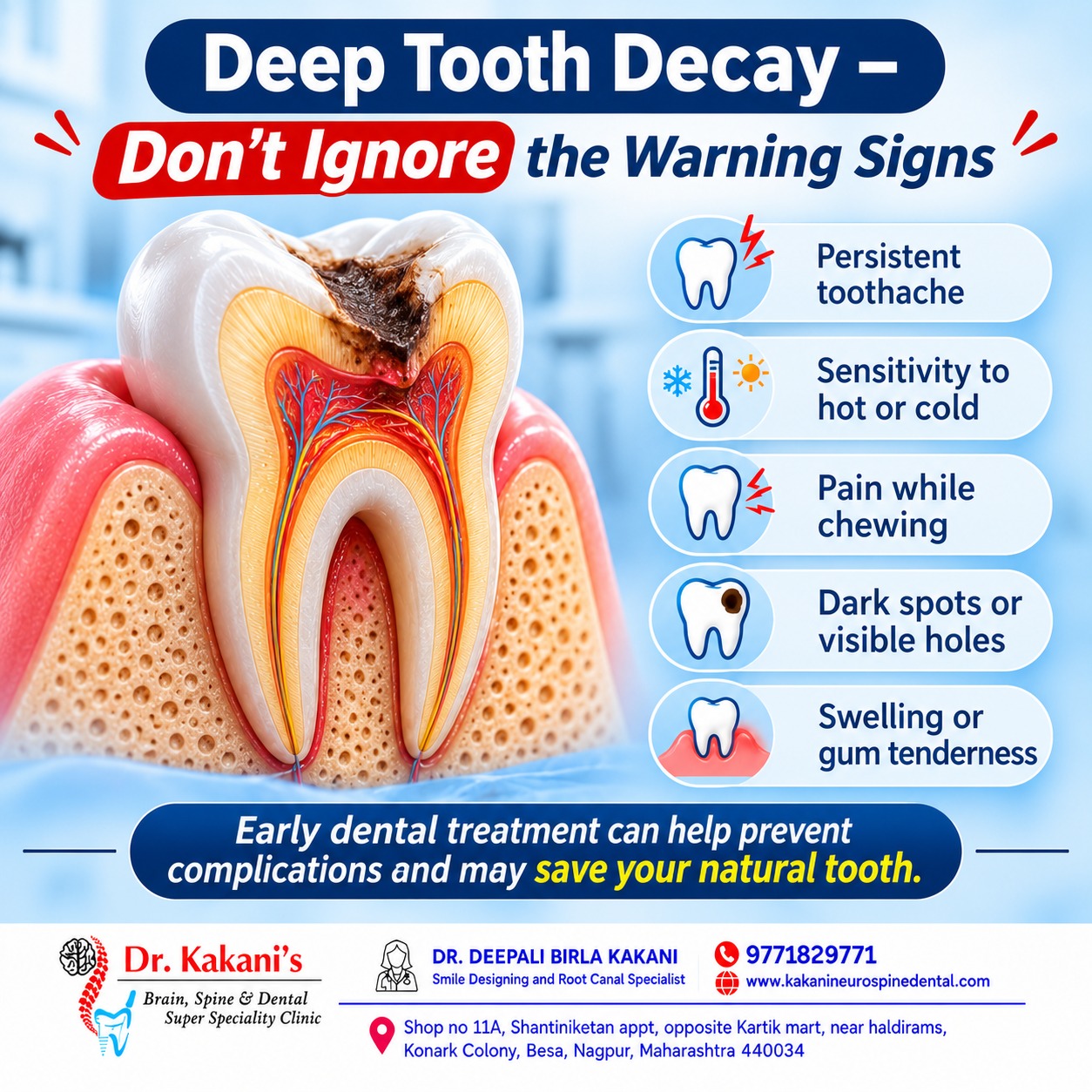
1. Persistent Toothache
A continuous or recurring toothache often indicates advanced tooth decay. Moreover, the pain may become worse while eating, drinking, or biting down on food. If the discomfort does not improve, visit your dentist for an examination.
2. Sensitivity to Hot and Cold Foods
Do you experience sharp pain when drinking hot tea or cold water? This sensitivity may indicate damage to the enamel or exposed dentin. However, prolonged sensitivity can also suggest that decay has reached deeper tooth structures.
3. Visible Holes or Dark Spots
Deep tooth decay may create visible holes, pits, or dark brown and black spots on the tooth surface. In addition, food particles can become trapped inside these cavities and cause discomfort.
4. Pain While Chewing
If you feel pain when biting or chewing food, tooth decay may have affected the deeper layers of your tooth. Furthermore, a damaged tooth can become more sensitive to pressure and develop cracks or structural weakness.
5. Swelling Around the Gums
Swollen or tender gums near a decayed tooth may indicate an infection. Moreover, you may notice redness, tenderness, or a small pus-filled swelling near the affected area. These symptoms require prompt dental attention.
What Causes Deep Tooth Decay?
Several everyday habits and dental conditions can increase your risk of developing deep tooth decay.
Poor Oral Hygiene: Inadequate brushing and flossing allow plaque and harmful bacteria to build up.
Frequent Sugar Consumption: Sugary foods and drinks provide fuel for bacteria that produce enamel-damaging acids.
Skipping Dental Check-ups: Without regular dental examinations, small cavities can progress into deeper decay.
Dry Mouth: Reduced saliva production makes it harder for your mouth to wash away food particles and neutralise acids.
Frequent Snacking: Repeated exposure to sugary or acidic foods increases the risk of enamel damage.
Untreated Cavities: Small cavities can gradually spread into deeper tooth structures without timely treatment.
What Happens If You Ignore Deep Tooth Decay?
Ignoring deep tooth decay can lead to several dental complications. Moreover, delaying treatment may make the problem more difficult and expensive to manage.
Common complications include:
Severe and persistent tooth pain
Infection inside the tooth
Dental abscess formation
Swelling around the gums or face
Damage to surrounding tissues
Weakening or fracture of the affected tooth
Tooth loss in advanced cases
Therefore, consult a dentist as soon as you notice unusual tooth pain or other warning signs.
Treatment Options for Deep Tooth Decay
The dentist selects the treatment according to the depth of decay, the condition of the tooth, and the presence of infection.
1. Dental Fillings
If decay affects the enamel and dentin but does not seriously damage the pulp, your dentist may remove the decayed portion and restore the tooth with a dental filling.
2. Root Canal Treatment
When deep tooth decay reaches the dental pulp, root canal treatment may help save the natural tooth. During this procedure, the dentist removes infected pulp tissue, cleans and disinfects the root canals, and seals them.
Moreover, the dentist may recommend a dental crown to protect the treated tooth and restore its strength.
3. Dental Crown
A dental crown covers and protects a weakened or extensively damaged tooth. Therefore, your dentist may recommend a crown after root canal treatment or when decay has damaged a large portion of the tooth.
4. Tooth Extraction
If the tooth has extensive damage and cannot be restored, the dentist may recommend extraction. However, dentists generally consider options to preserve the natural tooth whenever possible.
How Can You Prevent Deep Tooth Decay?
Good oral hygiene and regular dental visits can significantly reduce your risk of tooth decay.
Follow these simple preventive measures:
Brush your teeth twice daily with fluoride toothpaste.
Floss every day to remove food particles between teeth.
Reduce sugary snacks, sweets, and soft drinks.
Drink enough water throughout the day.
Avoid frequent snacking between meals.
Schedule regular dental check-ups.
Treat small cavities before they become deeper.
Additionally, maintain a balanced diet and follow your dentist’s recommendations for long-term oral health.
When Should You Visit a Dentist?
Do not wait for tooth pain to become unbearable before seeking dental care. Instead, schedule a dental examination if you notice persistent sensitivity, visible cavities, pain while chewing, or recurring toothaches.
However, seek urgent dental attention if you experience facial swelling, fever, pus, or difficulty swallowing or breathing. These symptoms may indicate a spreading dental infection, and breathing or swallowing difficulties require emergency medical care.
Get Timely Dental Care with Dr. Deepali Kakani
Dr. Kakani’s Brain, Spine & Dental Super Speciality Clinic
Appointment: 07261 35101
Website: www.kakineurospinedental.com
Address: Ground Floor, Medicine Multispeciality Clinic, Ramdaspeth, Nagpur.