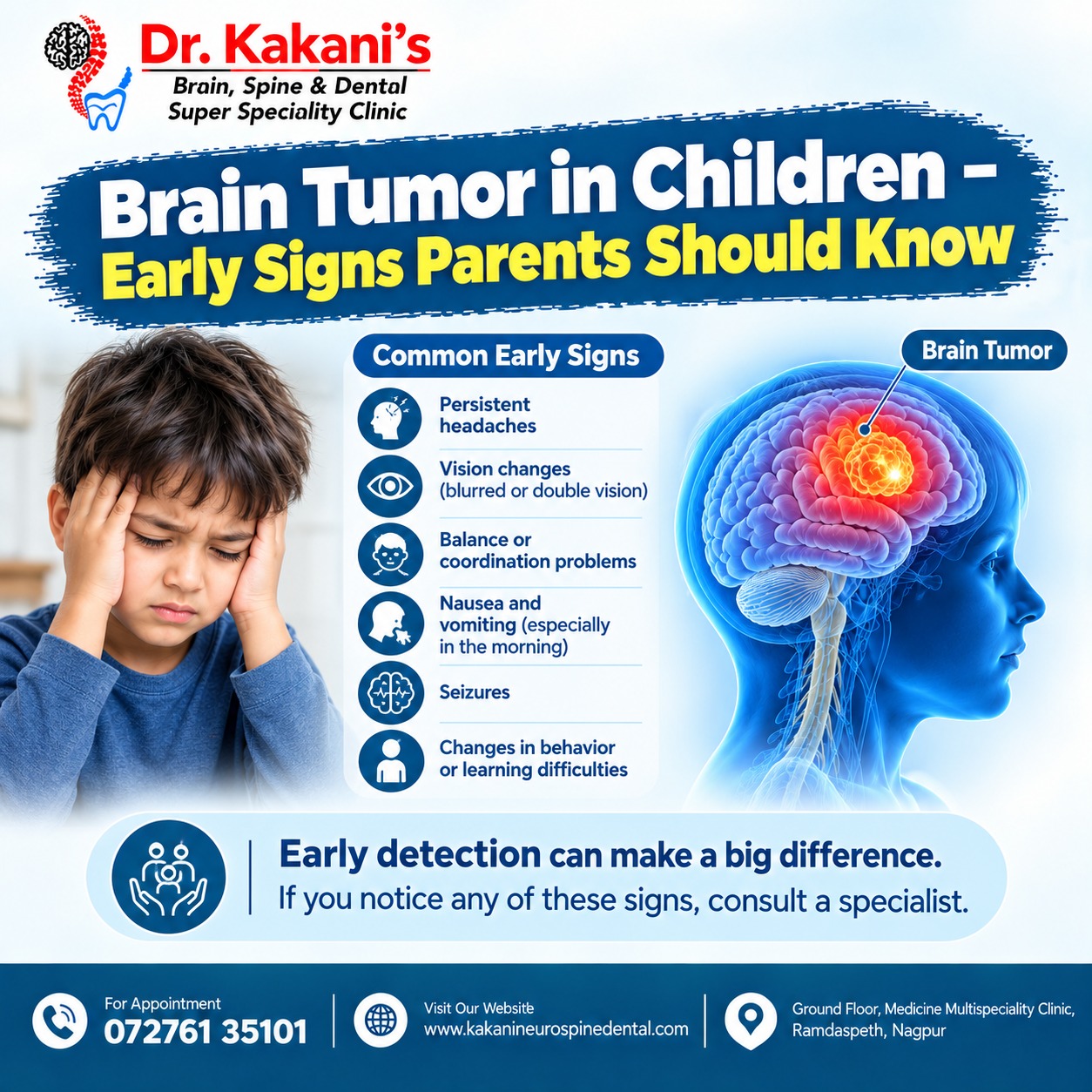
Brain Tumor in Children: Early Signs Every Parent Should Know
A child’s health and development matter deeply to every parent. However, some health changes may seem like common childhood problems, even when they need medical attention. A brain tumor in children can cause symptoms that vary depending on its location, size, and growth rate. Therefore, parents should understand the possible warning signs and know when to consult a doctor.
Moreover, early medical evaluation can help doctors identify the cause of unusual symptoms and recommend appropriate treatment. Although headaches, vomiting, and tiredness often occur for many reasons, persistent or worsening symptoms deserve attention.
What Is a Brain Tumor in Children?
A brain tumor develops when abnormal cells grow in or around the brain. These tumors can be benign (non-cancerous) or malignant (cancerous). However, even a non-cancerous tumor can affect a child’s health if it presses on important brain structures or blocks the normal flow of cerebrospinal fluid.
In addition, childhood brain tumors can develop in different parts of the brain, including areas that control movement, vision, balance, speech, and coordination. Therefore, symptoms may differ from one child to another.
In addition, childhood brain tumors can develop in different parts of the brain, including areas that control movement, vision, balance, speech, and coordination. Therefore, symptoms may differ from one child to another.
Doctors use neurological examinations, MRI scans, and other investigations to assess suspected brain tumors. However, symptoms alone cannot confirm a diagnosis, so parents should seek professional medical advice when concerns arise.
Early Signs of a Brain Tumor in Children
Parents should watch for changes that persist, worsen, or interfere with a child’s everyday activities. The following symptoms may have several causes, but they require attention when they appear repeatedly or alongside other warning signs.
1. Persistent or Worsening Headaches
Headaches are common in children. However, frequent, persistent, or progressively worsening headaches may require medical evaluation, particularly when they wake a child from sleep or occur with vomiting or neurological changes.
Moreover, younger children may struggle to explain their discomfort. Therefore, parents should observe changes in sleep, play, school performance, and daily routines.
2. Repeated Nausea and Vomiting
Repeated vomiting without an obvious cause can sometimes indicate increased pressure inside the skull. In addition, vomiting that occurs with persistent headaches, especially in the morning, deserves prompt medical assessment.
However, many common childhood illnesses also cause vomiting. Therefore, parents should consider the overall pattern of symptoms rather than assume that vomiting indicates a brain tumor.
3. Vision Problems
Some children may develop blurred vision, double vision, unusual eye movements, or difficulty focusing. Moreover, a child may begin bumping into objects, sitting unusually close to a screen, or struggling to read.
Therefore, parents should arrange a medical assessment if these changes persist or develop suddenly. Sudden vision loss or a sudden significant change in vision requires emergency evaluation.
4. Balance and Coordination Difficulties
A brain tumor may affect parts of the brain that control balance and coordination. As a result, a child may stumble more often, walk unsteadily, or struggle with activities that previously felt easy.
In addition, parents may notice changes in handwriting, difficulty holding objects, or unusual clumsiness. However, sudden difficulty walking or new weakness requires immediate medical attention.
5. Seizures
A seizure may cause uncontrolled movements, staring episodes, unusual sensations, or a temporary loss of awareness. Although several conditions can cause seizures, a first seizure always needs urgent medical assessment.
Therefore, parents should seek emergency help for a first seizure. Call emergency services if a seizure lasts five minutes or longer, another seizure begins before the child recovers, or the child has breathing difficulties.
6. Changes in Behaviour or Personality
Some children with brain conditions may become unusually irritable, tired, withdrawn, or less interested in their usual activities. Moreover, parents may notice changes in concentration, memory, school performance, or emotional responses.
However, stress, sleep problems, and other health conditions can also affect behaviour. Therefore, consult a healthcare professional when changes persist, worsen, or occur with headaches, vomiting, vision problems, or balance difficulties.
7. Weakness or Difficulty Using the Limbs
A child may develop weakness in an arm or leg, unusual difficulty gripping objects, or trouble performing familiar movements. In addition, some children may experience changes in speech or coordination.
These symptoms need prompt assessment because they can arise from several neurological conditions. Sudden weakness, facial drooping, or difficulty speaking requires emergency medical attention.
8. Unusual Sleepiness or Reduced Alertness
Some children may sleep more than usual, show reduced energy, or struggle to stay alert. However, fatigue alone does not usually indicate a brain tumor.
Therefore, parents should pay attention to persistent unexplained changes, especially when other symptoms occur. Seek emergency care if a child becomes difficult to wake, confused, or less responsive than usual.
How Do Brain Tumor Symptoms Differ by Age?
Children may show different symptoms depending on their age and developmental stage.
Babies and toddlers: Parents may notice unusual irritability, poor feeding, repeated vomiting, developmental changes, or an increase in head size. A bulging soft spot when a baby is calm and upright can also require urgent assessment.
Preschool children: Younger children may struggle to describe headaches or vision changes. Instead, parents may notice frequent falls, unusual crying, vomiting, or reduced interest in play.
School-age children: Older children may report headaches, double vision, dizziness, or difficulty concentrating. Moreover, parents and teachers may notice changes in academic performance or coordination.
Teenagers: Teenagers may describe persistent headaches, visual disturbances, weakness, or changes in balance. Therefore, parents should take recurring or worsening symptoms seriously at every age.
What Causes Brain Tumors in Children?
Doctors do not know the exact cause of most childhood brain tumors. However, these tumors develop when cells acquire changes that affect normal growth and division.
In some cases, inherited genetic conditions increase the risk of certain tumors. Nevertheless, most children diagnosed with brain tumors do not have a clear inherited cause.
Moreover, parents should not blame themselves for the development of a brain tumor. Doctors assess each child’s medical history, symptoms, and investigation results to understand the condition and plan appropriate care.
How Do Doctors Diagnose a Brain Tumor in Children?
Doctors begin by reviewing the child’s symptoms, medical history, and physical development. They may also perform a neurological examination to assess vision, balance, coordination, strength, reflexes, and alertness.
Moreover, doctors may recommend an MRI scan to obtain detailed images of the brain. In certain situations, they may use a CT scan or additional tests. If imaging identifies a suspicious growth, a specialist may recommend a biopsy or surgery to determine the tumor type.
Therefore, parents should share a clear history of symptoms, including when they started, how often they occur, and whether they are becoming more severe. This information helps doctors decide which investigations the child needs.
Treatment Options for Brain Tumors in Children
Treatment depends on the tumor’s type, location, size, grade, and effect on the child’s health. Therefore, a pediatric neuro-oncology team may recommend one or more approaches.
Surgery: Surgeons may remove as much of the tumor as safely possible when the tumor’s location and the child’s condition allow.
Radiation therapy: Specialists may use carefully planned radiation for selected tumor types and clinical situations.
Chemotherapy: Doctors may prescribe medicines that target tumor cells, depending on the diagnosis.
Targeted therapy: Some tumors respond to medicines that act on specific molecular changes.
Monitoring: In selected cases, specialists may recommend regular scans and examinations instead of immediate treatment.
Moreover, the care team may provide rehabilitation, educational support, and psychological support to help the child and family manage treatment and recovery.
When Should Parents Seek Medical Attention?
Parents should contact a healthcare professional if their child experiences persistent headaches, repeated unexplained vomiting, ongoing vision changes, increasing clumsiness, or unusual behavioural changes.
However, certain symptoms require immediate emergency care. These include a first seizure, sudden weakness, sudden difficulty speaking or walking, severe sudden headache, reduced consciousness, or difficulty waking the child.
Therefore, do not wait for symptoms to become severe before seeking advice. Prompt assessment helps doctors identify the cause and determine the next steps.
Consult Dr. Kakani's Clinic
Dr. Kakani’s Brain, Spine & Dental Super Speciality Clinic
Appointment: 07261 35101
Website: www.kakineurospinedental.com
Address: Ground Floor, Medicine Multispeciality Clinic, Ramdaspeth, Nagpur.
Frequently Asked Questions