Expert Neurosurgical Care for Skull Injuries
A skull fracture can occur after a serious fall, road accident, sports injury, or strong impact to the head. However, every skull fracture does not require surgery. Some fractures only need observation and medical care, while others can require urgent neurosurgical treatment. Skull Fracture Surgery In Nagpur focuses on evaluating the injury and choosing the safest treatment for each patient.
A detailed assessment can help doctors understand the fracture, check for brain injury, and identify possible complications. As a result, timely medical attention can play an important role in managing serious head injuries. Your neurosurgeon may use neurological examinations and brain imaging to assess the injury before recommending treatment.
Skull Fracture Surgery In Nagpur
What Is a Skull Fracture?
A skull fracture refers to a crack or break in one or more bones of the skull. The injury can range from a small crack to a more complex fracture involving bone displacement or damage to nearby structures.
a skull fracture can occur with or without an underlying brain injury. A patient may experience headache, swelling, dizziness, vomiting, loss of consciousness, or other symptoms after head trauma. However, symptoms can vary significantly, so doctors should evaluate significant head injuries promptly.
When Does a Skull Fracture Need Surgery?
Not every skull fracture requires an operation. However, doctors may consider surgery when the fracture creates significant complications or places pressure on the brain or surrounding structures.
Surgery may become necessary in selected cases involving depressed skull fractures, open fractures, significant bleeding, pressure on the brain, or associated structural damage. Consequently, the neurosurgeon considers the patient’s symptoms, neurological condition, imaging findings, and overall injury before choosing a treatment approach.
Types of Skull Fractures
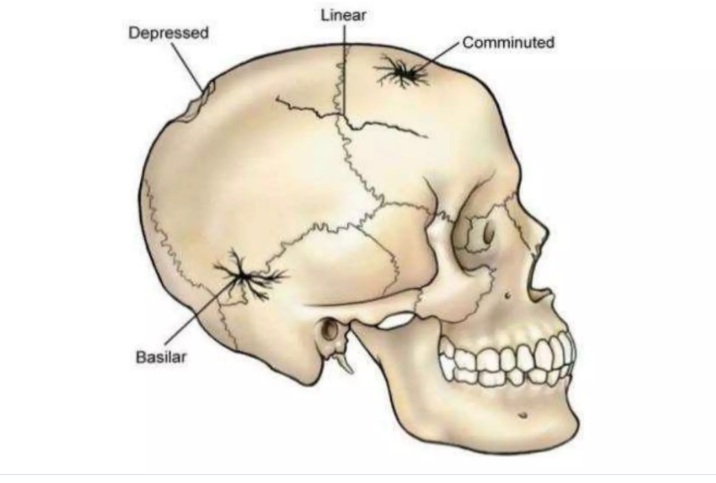
Doctors classify skull fractures according to their shape, location, and severity. Common types include:
- Linear skull fracture
- Depressed skull fracture
- Open or compound skull fracture
- Basilar skull fracture
- Diastatic skull fracture
- Complex skull fracture
Each type requires a different evaluation. For this reason, doctors should not determine treatment based only on the visible injury. Brain imaging can provide important information about the skull and surrounding structures.
Depressed Skull Fracture
A depressed skull fracture occurs when a broken section of the skull moves inward. Consequently, the displaced bone can potentially affect the tissues underneath it.
Some depressed fractures require surgical treatment, especially when they create significant pressure, involve an open wound, or accompany other serious injuries. However, the treatment decision depends on the patient’s complete clinical and imaging assessment.
Symptoms of a Skull Fracture
Symptoms can differ according to the severity and location of the injury. Therefore, anyone who experiences significant head trauma should take concerning symptoms seriously.
Possible symptoms include:
- Severe or persistent headache
- Swelling or tenderness on the scalp
- Bleeding from the scalp
- Loss of consciousness
- Dizziness
- Nausea or vomiting
- Confusion
- Vision changes
- Difficulty speaking
- Weakness or numbness
- Fluid or blood from the nose or ears
Severe symptoms require urgent medical attention. A person should not wait for symptoms to worsen after a significant head injury.
Skull Fracture Surgery In Nagpur
How Is a Skull Fracture Diagnosed?
Doctors usually begin with a detailed physical and neurological examination. They may then recommend imaging to understand the location and severity of the fracture.
A CT scan can provide detailed information about skull fractures and can also help doctors identify certain types of bleeding or other traumatic changes. Furthermore, doctors may use additional tests when the patient’s condition requires them.
Role Of X-Rays In Spondylitis Diagnosis
The surgical approach depends on the type and severity of the fracture. During surgery, the neurosurgeon may repair or remove damaged bone fragments and address associated problems when necessary.
In selected cases, the surgeon may also treat bleeding or pressure affecting the brain. As a result, the procedure can focus on protecting neurological function and stabilizing the affected area. The exact surgical plan depends on the patient’s injury and imaging findings.
Role Of MRI In Spondylitis Treatment
Prompt evaluation can help doctors identify serious complications after head trauma. However, treatment outcomes depend on several factors, including the severity of the fracture and any associated brain injury.
Potential goals of treatment may include:
- Protecting the brain
- Managing pressure around the brain
- Addressing displaced bone fragments
- Controlling associated bleeding
- Reducing the risk of complications
- Supporting neurological recovery
- Stabilizing the affected skull area
Your neurosurgeon can explain the expected goals and limitations of treatment after assessing the injury.
Skull Fracture Surgery In Nagpur
Skull Fracture With Brain Injury
A skull fracture can sometimes occur alongside a traumatic brain injury. Consequently, doctors need to assess both the skull and the brain after significant trauma.
Symptoms such as confusion, repeated vomiting, seizures, worsening headache, unusual sleepiness, weakness, or loss of consciousness can indicate a serious problem. Therefore, emergency medical assessment becomes especially important when these symptoms appear.
Emergency Care for Skull Fractures
A suspected skull fracture requires prompt medical assessment, particularly after a major accident or strong impact. However, you should not move a seriously injured person unnecessarily unless immediate safety requires movement.
Seek emergency care for symptoms such as loss of consciousness, repeated vomiting, seizures, severe headache, confusion, weakness, unequal pupils, or fluid or blood coming from the nose or ears. Early assessment can help doctors identify injuries that may require urgent treatment.
Book a Consultation for Skull Fracture Surgery In Nagpur
Skull Fracture Surgery In Nagpur
A skull fracture can require immediate medical attention, especially when the injury involves neurological symptoms or suspected brain damage. If you or someone close to you has experienced significant head trauma, seek professional medical evaluation without delay.
If you are searching for Skull Fracture Surgery In Nagpur, consult a qualified neurosurgeon for an appropriate assessment. Discuss the injury, imaging findings, treatment options, possible risks, and recovery expectations with your medical team.
Book An Appointment
Frequently Asked Questions
Connect with Dr. Nikhil Kakani Online – Stay Informed About Brain & Spine Health