
- November 5, 2026
- DrnikhilK
- 10:28 am
What Is Root Canal Treatment?
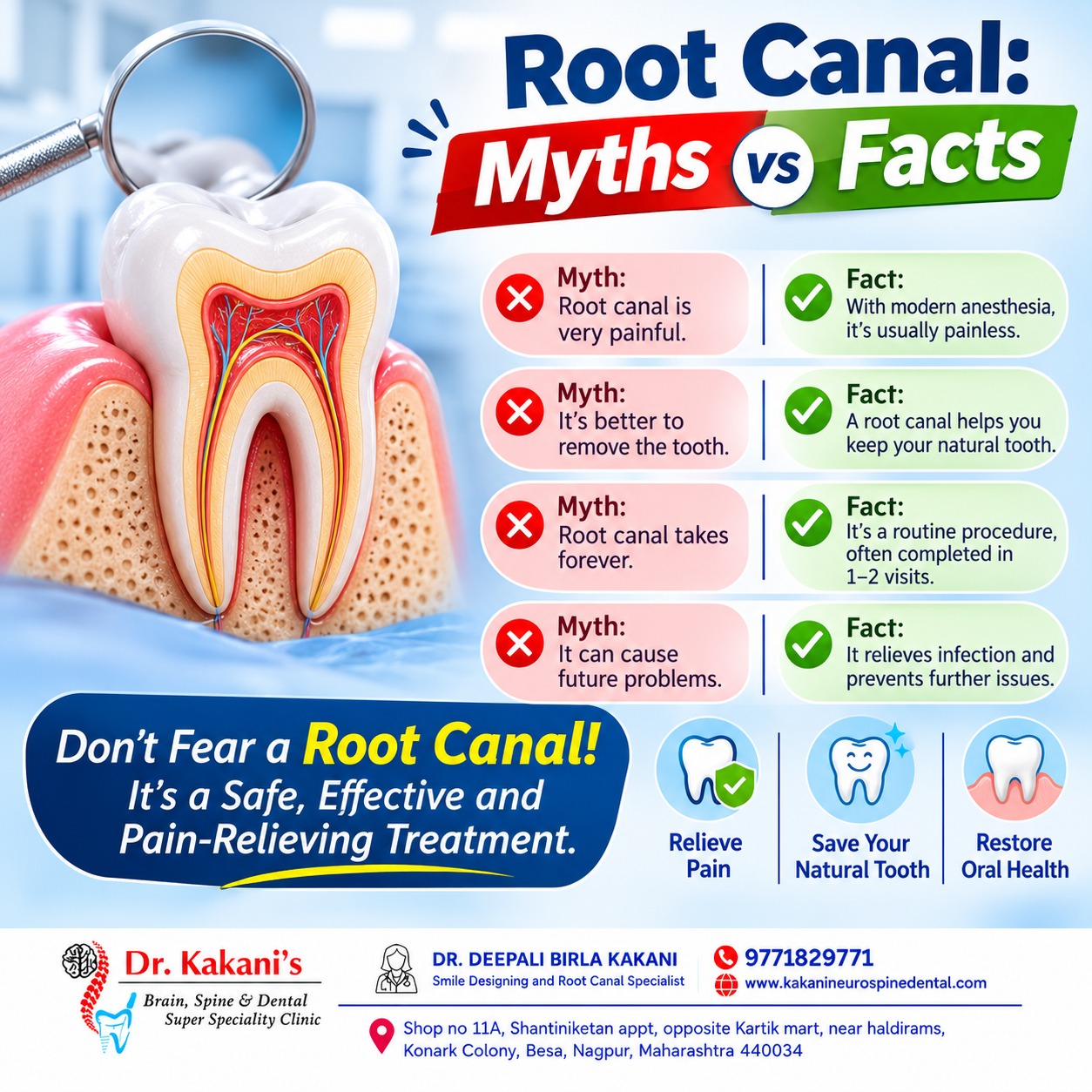
Root Canal: Common Myths vs Facts
Let’s understand some common myths about root canal treatment and discover the truth behind them.
Myth 1: Root Canal Treatment Is Very Painful
Fact: Modern root canal treatment is generally comfortable with the help of local anaesthesia. In fact, the procedure helps relieve pain caused by tooth infection. You may experience mild soreness after treatment, but it usually improves with proper care.
Myth 2: Tooth Extraction Is Better Than a Root Canal
Fact: Saving your natural tooth is generally preferable whenever possible. Root canal treatment removes the infection while preserving the remaining natural tooth structure. Moreover, keeping your natural tooth can help maintain proper chewing function and prevent unwanted tooth movement.
Myth 3: Root Canal Treatment Requires Many Visits
Fact: Many root canal treatments can be completed in one or two visits, depending on the condition of the tooth and the complexity of the infection. However, some cases may require additional appointments.
Myth 4: Root Canal Treatment Causes Health Problems
Fact: There is no reliable scientific evidence that properly performed root canal treatment causes diseases elsewhere in the body. Root canal treatment is an established dental procedure that helps eliminate infection inside the tooth.
Myth 5: A Root Canal Treated Tooth Does Not Need Further Care
Fact: A treated tooth still requires regular dental care. Brushing twice daily, flossing, and attending routine dental check-ups help maintain oral health. Additionally, a dental crown may be recommended to protect the tooth from fractures.
When Do You Need Root Canal Treatment?
You may need root canal treatment if you experience the following symptoms:
Persistent or severe toothache.
Sensitivity to hot and cold foods that lasts after the stimulus is removed.
Pain while chewing or biting.
Swelling or tenderness around the gums.
Darkening or discolouration of a tooth.
A pimple-like swelling on the gums.
However, some infected teeth may not cause noticeable symptoms. Therefore, regular dental examinations are important for early diagnosis.
What Happens During Root Canal Treatment?
Root canal treatment generally involves the following steps:
Dental Examination: The dentist examines your tooth and may recommend an X-ray to identify the infection.
Local Anaesthesia: The dentist numbs the affected area to keep you comfortable.
Infected Pulp Removal: The infected or damaged pulp is carefully removed.
Cleaning and Disinfection: The root canals are cleaned, shaped, and disinfected.
Sealing the Tooth: The cleaned canals are filled with a suitable dental material.
Final Restoration: A permanent filling or dental crown may be placed to restore the tooth’s strength and function.
Benefits of Root Canal Treatment
Root canal treatment offers several important benefits:
Preserves Natural Teeth: Helps save your original tooth instead of removing it.
Relieves Tooth Pain: Treats the source of pain caused by infection.
Stops Infection: Removes infected pulp and helps prevent the spread of infection.
Restores Chewing Function: Helps you chew comfortably after proper restoration.
Maintains Your Smile: Preserves the natural appearance of your teeth.
How to Care for Your Tooth After Root Canal Treatment
Proper aftercare supports healing and helps protect your treated tooth.
– Follow your dentist’s instructions carefully.
– Avoid chewing hard foods on the treated tooth until it receives its final restoration.
– Maintain good oral hygiene by brushing and flossing regularly.
– Attend follow-up appointments as recommended.
– Contact your dentist if you experience persistent pain, swelling, or other unusual symptoms.
When Should You Visit a Dentist?
Consult Dr. Kakani's Clinic
Dr. Kakani’s Brain, Spine & Dental Super Speciality Clinic
Appointment: 07261 35101
Website: www.kakineurospinedental.com
Address: Ground Floor, Medicine Multispeciality Clinic, Ramdaspeth, Nagpur.