
- October 24, 2026
- DrnikhilK
- 9:48 am
What Are Brain Metastases?
Common Symptoms of Brain Metastases
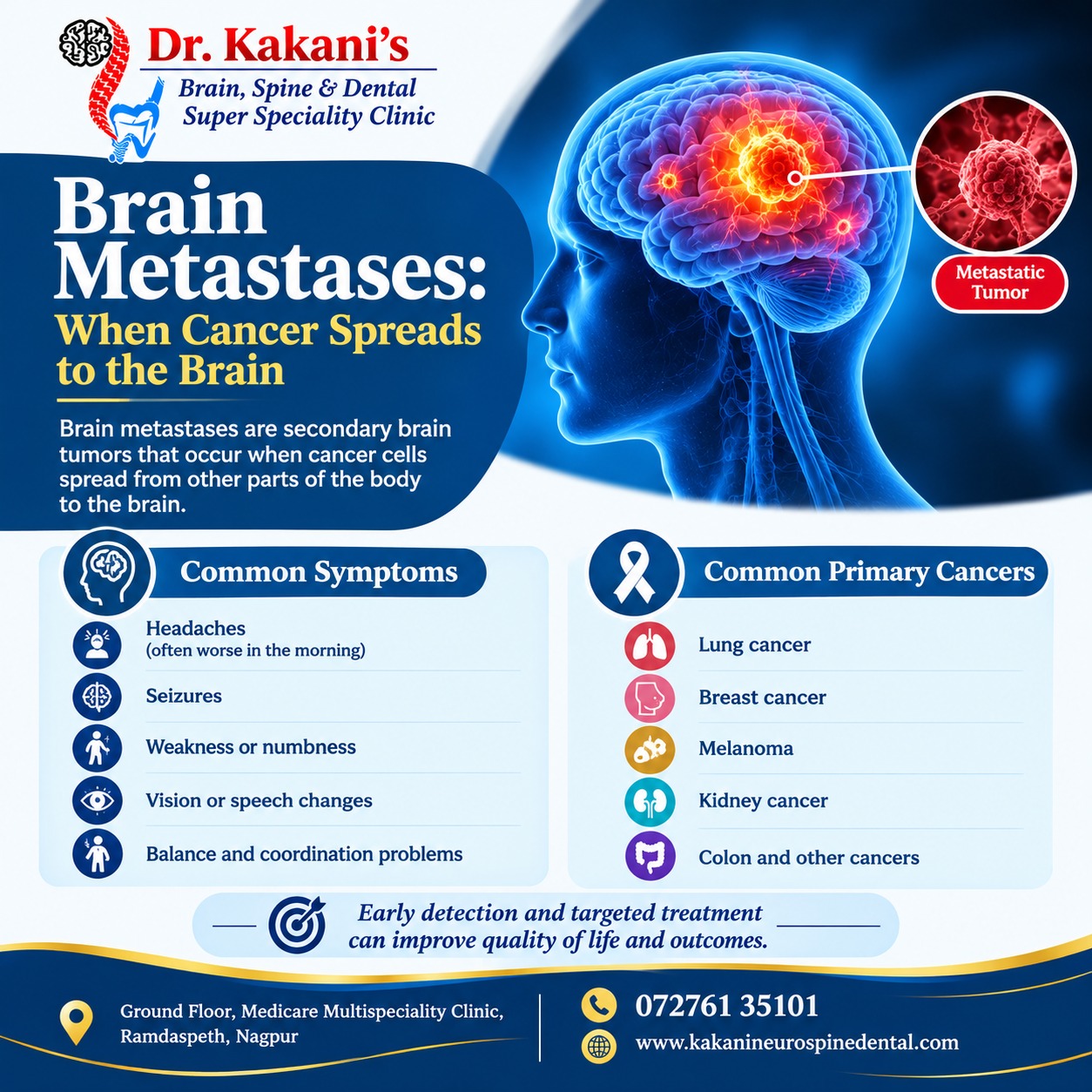
The symptoms of brain metastases depend on the size, number, and location of the tumours, as well as swelling in the surrounding brain tissue. Moreover, some patients develop symptoms gradually, while others experience sudden neurological changes.
Common symptoms include:
Persistent headaches: Headaches may become more frequent or severe over time.
Nausea and vomiting: Increased pressure inside the skull may cause these symptoms.
Seizures: Some patients experience new-onset seizures.
Weakness or numbness: Tumours may affect movement or sensation in the face, arms, or legs.
Vision problems: Patients may experience blurred vision, double vision, or other visual changes.
Memory and personality changes: Brain metastases may affect concentration, memory, behaviour, or mood.
Speech and balance difficulties: Some patients develop trouble speaking, walking, or coordinating movements.
However, these symptoms can also occur with other medical conditions. Therefore, anyone with a history of cancer who develops new neurological symptoms should contact their healthcare team promptly.
What Causes Cancer to Spread to the Brain?
Brain metastases develop when cancer cells break away from the original tumour and travel to the brain, most commonly through the bloodstream. Moreover, these cells may grow in brain tissue and affect nearby structures.
Several cancers can spread to the brain, including:
Lung cancer
Breast cancer
Melanoma (a type of skin cancer)
Kidney cancer
Colorectal cancer
However, not every patient with these cancers develops brain metastases. In addition, the likelihood of spread depends on the cancer type, its characteristics, and the stage of the disease.
How Are Brain Metastases Diagnosed?
Early and accurate diagnosis helps doctors determine the most appropriate treatment approach. Therefore, specialists evaluate the patient’s medical history, symptoms, neurological function, and imaging results before developing a treatment plan.
1. Neurological Examination
Doctors assess muscle strength, reflexes, coordination, balance, vision, speech, and cognitive function. Moreover, these findings can help identify changes that require further investigation.
2. MRI Brain Scan
A contrast-enhanced magnetic resonance imaging (MRI) scan is commonly the preferred imaging test for detecting brain metastases. In addition, it helps doctors evaluate the number, size, and location of lesions and identify surrounding swelling.
3. CT Scan
A computed tomography (CT) scan may help detect brain lesions, particularly in urgent situations or when an MRI is unsuitable. However, doctors may recommend an MRI for more detailed evaluation.
4. Biopsy and Additional Tests
In selected cases, doctors may recommend a biopsy to examine tumour tissue and clarify the diagnosis. Moreover, additional imaging or laboratory tests may help identify the original cancer or assess whether it has spread elsewhere.
Treatment Options for Brain Metastases
Treatment for brain metastases depends on the original cancer, the number and location of brain lesions, the patient’s overall health, and individual treatment goals. Therefore, a multidisciplinary team may combine different treatments to control tumour growth, relieve symptoms, and support quality of life.
1. Stereotactic Radiosurgery
Stereotactic radiosurgery delivers highly focused radiation to targeted brain lesions without requiring an incision. Moreover, doctors may recommend this treatment for selected patients with one or more suitable lesions.
2. Whole-Brain Radiation Therapy
Whole-brain radiation therapy treats the brain more broadly and may be appropriate for selected patients with multiple metastases. However, doctors carefully weigh its potential benefits against possible side effects and cognitive effects.
3. Brain Tumour Surgery
Surgery may help remove accessible brain metastases, reduce pressure on surrounding tissue, or obtain tissue for diagnosis. In addition, doctors consider the tumour’s location, size, number, and the patient’s overall condition before recommending surgery.
4. Targeted Therapy and Immunotherapy
Certain targeted medicines and immunotherapies can help treat brain metastases from specific cancer types. Moreover, doctors may use tumour testing and other clinical findings to determine whether these treatments are suitable.
5. Chemotherapy and Other Cancer Medicines
Some chemotherapy medicines may help treat particular cancers that have spread to the brain. However, their effectiveness varies because certain medicines have limited ability to cross the blood-brain barrier.
6. Supportive and Symptom Management
Doctors may prescribe corticosteroids to reduce swelling around brain lesions when appropriate. In addition, they may recommend anti-seizure medicines for patients who experience seizures, rehabilitation, and supportive care to improve comfort and daily functioning.
Can Brain Metastases Be Treated Successfully?
When Should You Seek Medical Attention?
Anyone with a history of cancer should report new or worsening headaches, unexplained weakness, changes in vision, memory difficulties, or balance problems to their healthcare team. However, a first seizure, sudden weakness on one side, sudden speech difficulties, or a severe sudden headache requires emergency medical assessment.
Moreover, prompt evaluation can help doctors identify the cause of symptoms and determine whether urgent treatment is necessary.
Consult Dr. Kakani's Clinic
Dr. Kakani’s Brain, Spine & Dental Super Speciality Clinic
Appointment: 07261 35101
Website: www.kakineurospinedental.com
Address: Ground Floor, Medicine Multispeciality Clinic, Ramdaspeth, Nagpur.