- October 22, 2026
- DrnikhilK
- 10:35 am
What Is a Glioma?
Common Types of Gliomas
- Astrocytoma: Develops from astrocytes, a type of glial cell that supports neurons.
- Oligodendroglioma: Develops from oligodendrocyte-lineage cells, which help form the protective covering around nerve fibres.
- Ependymoma: Develops from cells associated with the spaces and fluid pathways inside the brain and spinal cord.
- Glioblastoma: A highly aggressive type of adult-type diffuse glioma that requires prompt specialist evaluation.
What Is Glioblastoma?
Common Characteristics of Glioblastoma
Rapid tumour growth
Invasion into surrounding brain tissue
Potential to cause significant neurological symptoms
Complex treatment requirements
A need for ongoing medical monitoring
Early assessment and a coordinated treatment approach can help patients understand their options and receive appropriate care.
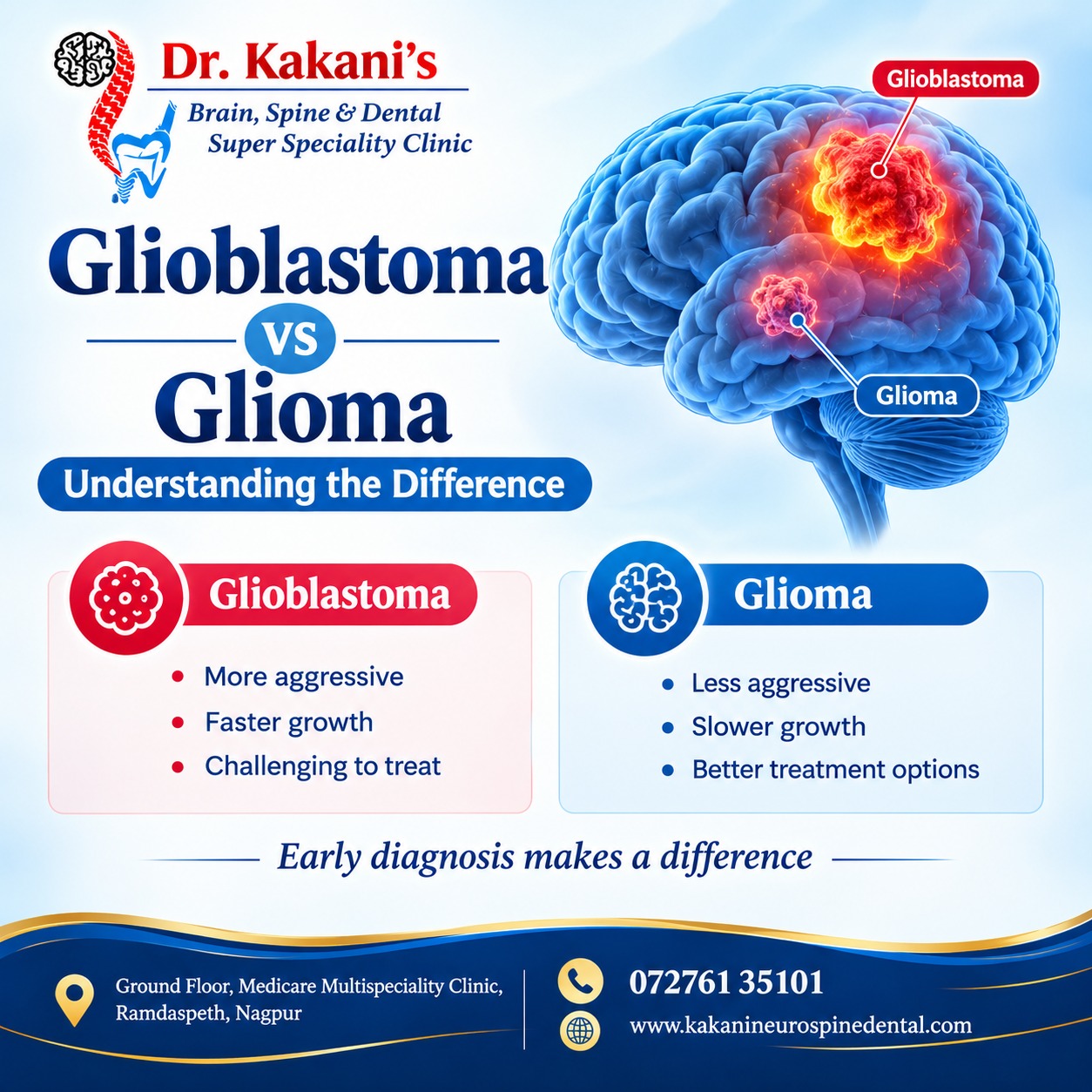
Glioblastoma vs Glioma: Key Differences
Although glioblastoma belongs to the glioma family, the two terms do not mean the same thing.
| Feature | Glioma | Glioblastoma |
|---|---|---|
| Meaning | Broad category of glial tumours | Specific aggressive type of glioma |
| Growth rate | May grow slowly or rapidly | Usually grows rapidly |
| Tumour grade | Varies according to tumour type | CNS WHO grade 4 |
| Symptoms | Depend on location, size, and growth | May progress rapidly, depending on location |
| Diagnosis | MRI and tissue or molecular assessment when indicated | MRI and tissue or molecular assessment |
| Treatment | Depends on tumour type, grade, and molecular findings | Commonly involves surgery when feasible, radiotherapy, and chemotherapy |
| Prognosis | Varies widely by tumour type | Generally more serious than lower-grade gliomas |
Symptoms of Glioma and Glioblastoma
Both conditions can produce similar symptoms because they affect the brain and its surrounding structures. However, the symptoms depend on the tumour’s location, size, growth rate, and effect on nearby brain tissue.
Common symptoms include:
Persistent or worsening headaches
Seizures, particularly in people who have never experienced them before
Nausea or vomiting associated with increased pressure inside the skull
Changes in memory, concentration, or behaviour
Difficulty speaking or understanding language
Weakness or numbness in an arm or leg
Problems with balance, coordination, or walking
Changes in vision
In some cases, symptoms develop gradually. However, rapidly worsening headaches, new neurological weakness, confusion, or a first seizure require urgent medical assessment.
What Causes Glioma and Glioblastoma?
The exact cause of most gliomas, including glioblastoma, remains unknown. These tumours develop because of genetic changes in cells that affect their normal growth and division.
Nevertheless, researchers have identified certain risk factors.
Possible Risk Factors
Exposure to ionizing radiation: Previous radiation exposure to the head can increase the risk of developing certain brain tumours.
Inherited genetic conditions: Rare genetic syndromes can increase the risk of gliomas.
Age: Glioblastoma occurs more frequently in older adults, although it can develop at other ages.
Most people diagnosed with glioma do not have an identifiable inherited risk factor. Additionally, doctors have not established ordinary mobile phone use as a cause of glioblastoma.
How Are Glioma and Glioblastoma Diagnosed?
Accurate diagnosis helps doctors determine the tumour type and select an appropriate treatment plan. Therefore, specialists may use several diagnostic methods.
1. Neurological Examination
First, the doctor evaluates muscle strength, reflexes, coordination, vision, speech, and cognitive function. These assessments can help identify areas of the nervous system that the tumour may affect.
2. MRI Brain Scan
Next, magnetic resonance imaging (MRI) helps doctors examine the tumour’s location, size, and appearance. Doctors may use contrast-enhanced MRI to obtain additional information about the tumour.
However, MRI findings alone cannot always establish the exact tumour type.
3. Biopsy or Surgical Tissue Examination
When medically appropriate, a surgeon obtains tumour tissue through a biopsy or surgery. A pathologist examines the sample to identify the tumour’s characteristics.
4. Molecular Testing
Furthermore, molecular testing can identify important genetic and molecular changes, including IDH status and other markers when indicated. These findings help specialists classify the tumour according to current diagnostic standards and guide treatment decisions.
Treatment Options for Glioma and Glioblastoma
Treatment depends on the tumour type, grade, location, molecular characteristics, the patient’s overall health, and individual preferences. Consequently, doctors develop a personalized treatment plan for each patient.
Surgery
When feasible, surgeons aim to remove as much of the tumour as safely possible. Surgery can also provide tissue for an accurate diagnosis. However, some tumours cannot be completely removed because they involve important areas of the brain.
Radiation Therapy
Radiation therapy uses targeted radiation to damage tumour cells and control tumour growth. Doctors frequently recommend it after surgery for glioblastoma and for selected other gliomas, depending on their characteristics.
Chemotherapy
Chemotherapy uses medicines to target cancer cells. For many adults with newly diagnosed glioblastoma, temozolomide is an important part of treatment, commonly alongside radiation therapy.
For other gliomas, doctors select chemotherapy based on tumour type and molecular findings.
Targeted Therapy
In selected cases, targeted medicines may help address specific molecular changes within a tumour. However, eligibility depends on the tumour’s genetic profile and the availability and suitability of the treatment.
Regular Monitoring
Finally, follow-up appointments and MRI scans help doctors assess treatment response and monitor for tumour progression or recurrence. Depending on the diagnosis, doctors may recommend active surveillance for certain slower-growing gliomas.
Recovery and Follow-Up Care
Recovery varies according to the tumour’s location, the type of treatment, and the patient’s overall condition. Some patients need rehabilitation to improve speech, movement, balance, or cognitive function after treatment.
To support recovery, patients should follow their medical team’s instructions, attend scheduled follow-up appointments, and report new or worsening symptoms promptly.
Additionally, family support, nutritional guidance, psychological support, and rehabilitation services can help improve day-to-day functioning and quality of life.
When Should You Consult a Specialist?
Consult a qualified neurologist, neurosurgeon, or neuro-oncology team if you experience persistent neurological symptoms or receive an abnormal brain MRI report.
Seek emergency medical care for a first seizure, sudden weakness, new speech difficulties, or a severe and sudden headache.
Above all, do not delay specialist evaluation when symptoms worsen. Early assessment helps doctors identify the underlying problem and discuss appropriate next steps.
Consult Dr. Kakani's Clinic
Dr. Kakani’s Brain, Spine & Dental Super Speciality Clinic
Appointment: 07261 35101
Website: www.kakineurospinedental.com
Address: Ground Floor, Medicine Multispeciality Clinic, Ramdaspeth, Nagpur.