- October 19, 2026
- DrnikhilK
- 9:46 am
What Is Rehabilitation After Brain Tumour Treatment?
The primary goal is to help patients regain as much independence as possible. For example, some patients need support with walking, while others require help with speaking, remembering information or completing everyday tasks. In addition, rehabilitation professionals assess individual needs and create suitable recovery goals.
Why Is Rehabilitation Important After Brain Tumour Treatment?
Recovery does not always end when surgery or other treatment finishes. Depending on the tumour and treatment, patients may experience several challenges.
Muscle weakness: Some patients need exercises to improve strength and movement.
Balance problems: Rehabilitation can help patients practise safer walking and movement.
Speech difficulties: Speech therapy can support communication and language skills.
Memory and concentration changes: Cognitive rehabilitation can help patients practise thinking and memory strategies.
Fatigue: Activity planning and adequate rest can help patients manage low energy.
Emotional challenges: Counselling and family support can help patients cope with anxiety and changes in daily life.
However, not every patient experiences these difficulties. The rehabilitation plan should reflect the patient’s symptoms, abilities and medical condition
Types of Rehabilitation After Brain Tumour Treatment
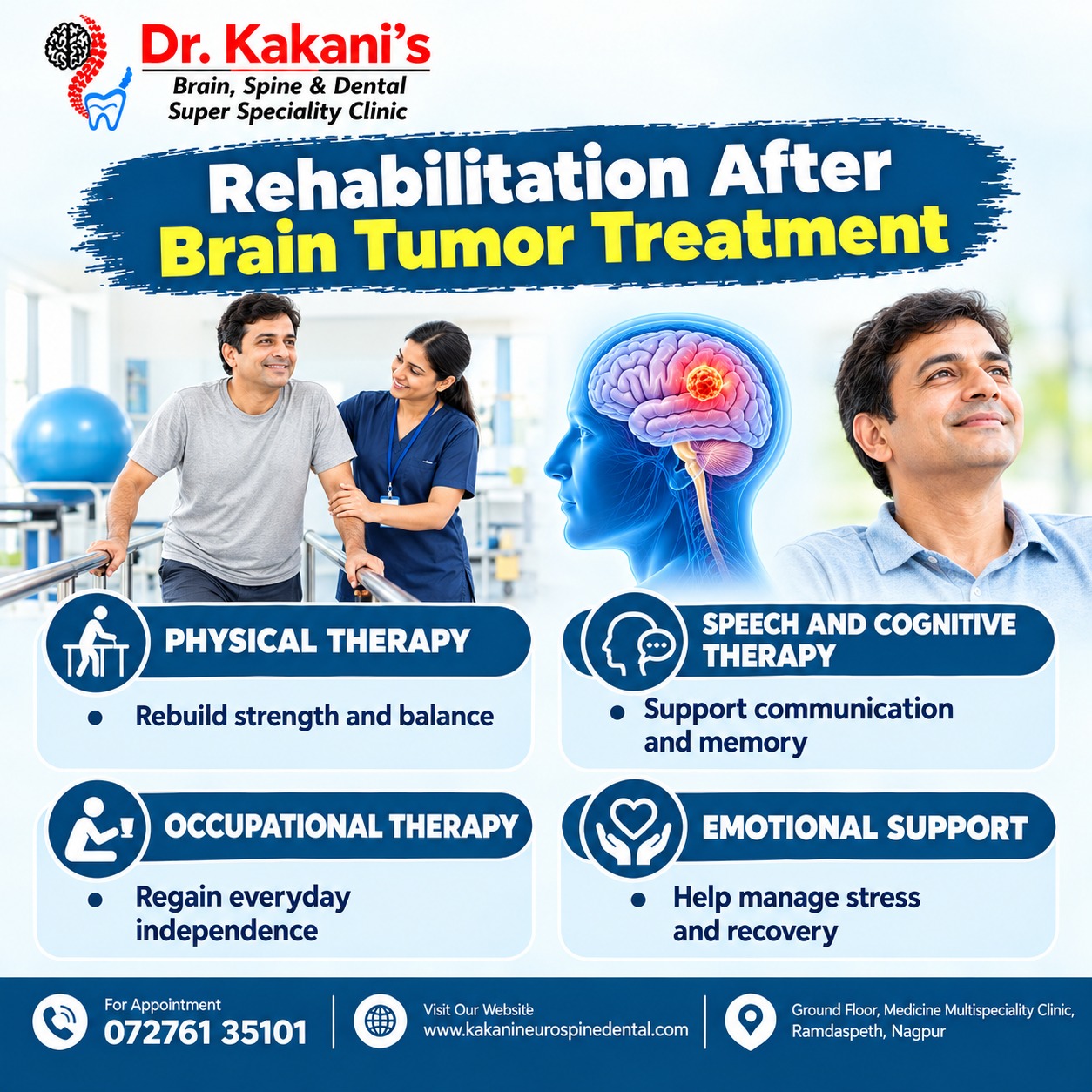
1. Physical Therapy
Physical therapy helps patients work towards better muscle strength, coordination, balance and mobility. A qualified physiotherapist may recommend supervised exercises, walking practice and movement training based on the patient’s condition.
Furthermore, physical therapy can help patients practise daily movements more safely. Patients should avoid strenuous exercises until their treating doctor confirms that they can perform them safely.
2. Occupational Therapy
Occupational therapy helps patients manage everyday activities such as dressing, bathing, eating, writing and preparing meals. In addition, therapists may suggest practical adaptations that make home activities safer and easier.
For patients planning to return to work, occupational therapy may also address the functional skills required for their job.
3. Speech and Swallowing Therapy
Some brain tumours and treatments can affect language, speech clarity or swallowing. Speech-language therapists assess these difficulties and develop suitable exercises and communication strategies.
Moreover, patients with swallowing problems may need a professional swallowing assessment to reduce the risk of food or liquid entering the airway.
4. Cognitive Rehabilitation
Cognitive rehabilitation focuses on difficulties with memory, attention, concentration, planning and problem-solving. Therapists may recommend memory exercises, written reminders, structured routines and other practical strategies.
As a result, patients may find it easier to organise daily tasks and manage everyday responsibilities. However, improvement varies according to the individual’s condition.
5. Emotional and Psychological Support
Brain tumour treatment can affect emotional wellbeing, relationships and confidence. Therefore, counselling, support groups and family involvement can provide valuable assistance during recovery.
Patients should discuss persistent anxiety, low mood, sleep difficulties or emotional changes with their healthcare team.
Home Care Tips After Brain Tumour Treatment
Home care supports rehabilitation when patients follow their treating team’s instructions. Consider these practical steps:
Follow the recovery plan: Attend scheduled rehabilitation sessions and medical appointments.
Maintain a safe environment: Remove loose rugs, improve lighting and keep frequently used items within easy reach.
Balance activity and rest: Follow a manageable daily routine and take breaks when needed.
Eat a balanced diet: Choose nutritious meals and maintain hydration according to your doctor’s advice.
Take medicines as prescribed: Do not stop or change medication without medical guidance.
Ask for assistance: Family members can help with mobility, appointments and everyday activities when necessary.
Track symptoms: Record any new or worsening symptoms and report them to your treating doctor.
Additionally, patients should not begin supplements, intense exercise programmes or alternative treatments without checking with their healthcare team.
How Long Does Recovery Take After Brain Tumour Treatment?
Follow-Up Care After Brain Tumour Treatment
Consult Dr. Kakani's Clinic
Dr. Kakani’s Brain, Spine & Dental Super Speciality Clinic
Appointment: 07261 35101
Website: www.kakineurospinedental.com
Address: Ground Floor, Medicine Multispeciality Clinic, Ramdaspeth, Nagpur.