
- October 13, 2026
- DrnikhilK
- 7:19 am
What Is a Brain MRI?
When Does a Headache Require a Brain MRI?
Most headaches do not require advanced imaging. However, doctors may recommend a brain MRI when a headache shows unusual features or occurs alongside other concerning symptoms.
Common reasons for further evaluation include:
Persistent or progressively worsening headaches.
New headaches that begin later in adulthood.
Headaches accompanied by vision changes.
Unexplained weakness, numbness, or balance problems.
Seizures or changes in mental function.
Headaches associated with certain abnormal neurological examination findings.
In addition, a doctor may recommend imaging when the headache pattern changes significantly or when the symptoms suggest an underlying neurological problem.
What Can a Brain MRI Reveal?
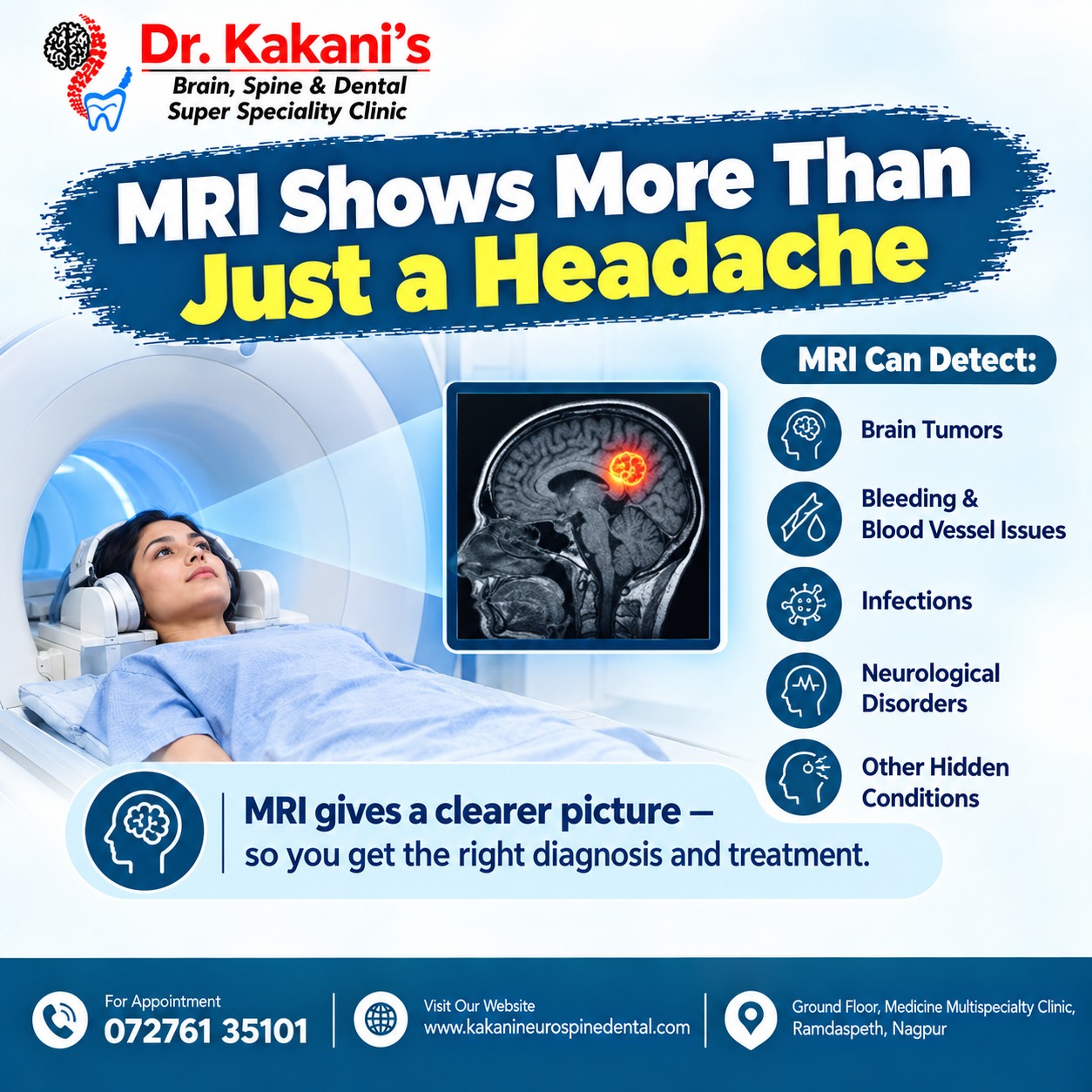
A brain MRI can help doctors identify or investigate several conditions that may cause headaches.
1. Brain Tumors
Some brain tumors can cause persistent headaches, particularly when they affect surrounding structures or increase pressure inside the skull. However, most headaches do not indicate a brain tumor. An MRI can help doctors identify a suspected tumor and assess its location and characteristics.
2. Structural Brain Abnormalities
Certain structural abnormalities, including Chiari malformation, can sometimes contribute to headaches or other neurological symptoms. Therefore, MRI helps doctors examine brain structures and determine whether an abnormality may explain the patient’s symptoms.
3. Inflammation and Infection
MRI can reveal changes associated with certain inflammatory conditions and infections affecting the brain. However, doctors may need additional tests, clinical examinations, or laboratory investigations to confirm the underlying diagnosis.
4. Blood Vessel-Related Abnormalities
Depending on the imaging technique, doctors can investigate selected blood vessel abnormalities, including certain aneurysms or vascular malformations. Moreover, they may recommend magnetic resonance angiography (MRA) when they need detailed images of blood vessels.
5. Other Neurological Conditions
MRI may also help doctors investigate selected demyelinating conditions, areas of previous injury, or other structural changes that could relate to a patient’s symptoms.
Does Every Headache Need an MRI?
Warning Signs You Should Never Ignore
Certain headache symptoms require urgent medical attention. Seek emergency care if you experience:
A sudden, extremely severe headache that reaches maximum intensity within seconds or minutes.
A headache accompanied by new weakness, difficulty speaking, confusion, or loss of consciousness.
A severe headache with fever and a stiff neck.
A new headache following a significant head injury.
A severe headache with sudden vision loss.
Moreover, a new or worsening headache during pregnancy or after childbirth requires prompt medical assessment.
What Happens After a Brain MRI?
After the scan, a radiologist examines the images and prepares a report. Your treating doctor then interprets the findings alongside your symptoms, medical history, and examination results.
If the MRI identifies an abnormality, your doctor may recommend further tests, medication, specialist consultation, or another appropriate treatment. However, an incidental MRI finding does not always explain the headache or require treatment.
In addition, a normal MRI does not rule out every possible cause of headache. Conditions such as migraine can occur even when brain imaging appears normal.
Consult Dr. Kakani's Clinic
Dr. Kakani’s Brain, Spine & Dental Super Speciality Clinic
Appointment: 07261 35101
Website: www.kakineurospinedental.com
Address: Ground Floor, Medicine Multispeciality Clinic, Ramdaspeth, Nagpur.