
- October 10, 2026
- DrnikhilK
- 10:08 am
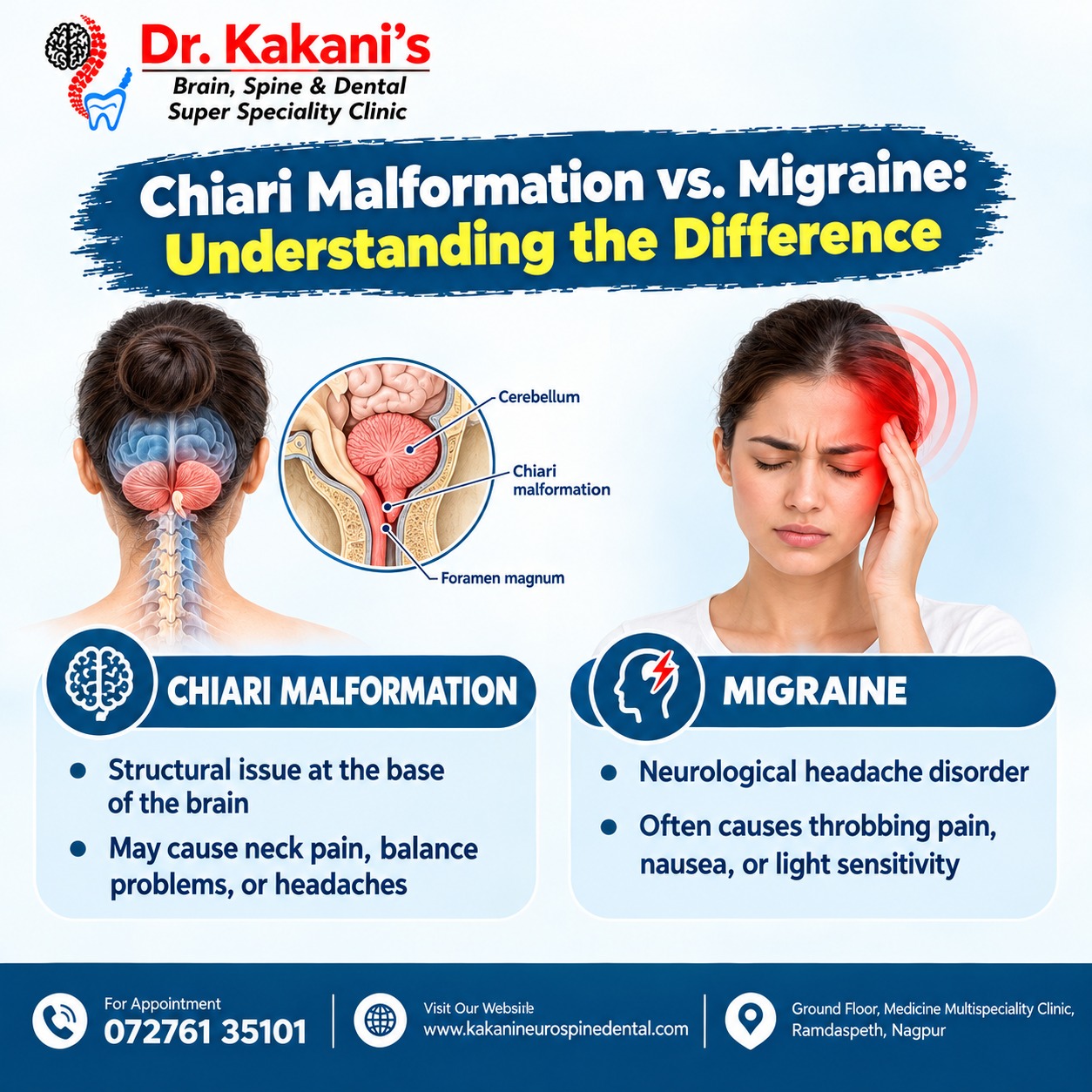
What Is Chiari Malformation?
Common symptoms include:
Headaches at the back of the head or upper neck
Head pain that worsens when coughing, sneezing, or straining
Neck pain and stiffness
Dizziness and balance difficulties
Numbness, tingling, or muscle weakness
Vision or swallowing difficulties
Therefore, persistent headaches accompanied by neurological symptoms deserve medical attention. A specialist may recommend an MRI to evaluate the brain and spinal cord.
What Is a Migraine?
Common migraine symptoms include:
Throbbing or pulsating headache
Pain that may worsen with routine physical activity
Nausea or vomiting
Sensitivity to light, sounds, or smells
Visual disturbances, including flashing lights or zigzag patterns
Fatigue and difficulty concentrating
Moreover, stress, sleep changes, hormonal fluctuations, missed meals, and certain environmental factors can trigger migraine attacks in susceptible individuals. Therefore, identifying personal triggers and following an appropriate treatment plan can help manage symptoms.
Chiari Malformation vs. Migraine: Key Differences
| Feature | Chiari Malformation | Migraine |
|---|---|---|
| Underlying cause | Structural abnormality at the base of the skull | Neurological disorder involving complex brain and nerve mechanisms |
| Typical headache location | Often the back of the head or upper neck | Often one side of the head, but can affect other areas |
| Common triggers | Coughing, sneezing, bending, or straining may worsen headaches | Stress, sleep changes, hormonal changes, and individual triggers |
| Associated symptoms | Balance problems, neck pain, numbness, or swallowing difficulties | Nausea, vomiting, light sensitivity, or sound sensitivity |
| Diagnosis | Usually requires MRI imaging and clinical evaluation | Primarily based on medical history and neurological examination |
| Treatment | Observation, symptom management, or surgery in selected cases | Acute medications, preventive treatment, and lifestyle management |
How Can You Tell Whether a Headache Is Related to Chiari Malformation or Migraine?
The pattern of your headache can provide useful information. However, no single symptom can reliably distinguish Chiari malformation from migraine.
1. Headache Location and Duration
Chiari-related headaches often occur at the back of the head, near the base of the skull. Some episodes last only briefly, especially when coughing or straining triggers them. In contrast, migraine attacks commonly involve throbbing pain that lasts several hours or longer.
However, these patterns can overlap. Therefore, doctors consider the duration, location, severity, and frequency of headaches before recommending further tests.
2. Triggers and Associated Symptoms
Chiari-related headaches may worsen during coughing, sneezing, or straining. In addition, some people experience neck pain, dizziness, poor coordination, or numbness.
Migraine attacks, on the other hand, may follow changes in sleep, stress, meals, or hormones. Moreover, nausea and sensitivity to light or sound often accompany migraine.
3. Neurological Symptoms
Both conditions can cause visual disturbances or dizziness. However, persistent balance difficulties, progressive weakness, swallowing problems, or numbness may indicate a neurological condition that requires further assessment.
Therefore, seek medical advice if headaches occur alongside new or worsening neurological symptoms. A healthcare professional can assess whether you need imaging or other investigations.
Diagnosing Chiari Malformation
An MRI of the brain helps doctors identify structural changes around the skull base and cerebellum. Depending on the findings and symptoms, a specialist may recommend imaging of the spinal cord or a specialised MRI to assess cerebrospinal fluid flow.
Moreover, doctors interpret scan findings alongside the patient’s symptoms and examination results. An MRI finding alone does not establish that Chiari malformation causes the headache.
Diagnosing Migraine
Doctors usually diagnose migraine through a detailed medical history and clinical examination. They assess the frequency, duration, location, and nature of headaches, along with symptoms such as nausea and light sensitivity.
However, doctors may recommend MRI or other tests when symptoms suggest a different cause or when warning signs appear. Therefore, an accurate diagnosis helps guide the most appropriate treatment.
Treatment Options for Chiari Malformation and Migraine
Treatment depends on the diagnosis, severity of symptoms, and impact on daily life. Moreover, Chiari malformation and migraine require different management strategies.
Chiari Malformation Treatment
People without symptoms may only need regular monitoring. However, doctors may recommend medication to manage certain symptoms and follow-up imaging when appropriate.
In selected cases, a neurosurgeon may recommend decompression surgery to create more space around the affected area and improve cerebrospinal fluid flow. The decision depends on symptoms, examination findings, imaging results, and associated complications. Surgery does not necessarily resolve every headache, especially when migraine also contributes to the pain.
Migraine Treatment
Migraine treatment may include medicines that relieve an ongoing attack and preventive treatments that reduce the frequency or severity of future attacks. Moreover, doctors may recommend regular sleep, hydration, balanced meals, exercise, and headache tracking.
Keeping a headache diary can help identify personal triggers and assess treatment effectiveness. However, patients should consult a healthcare professional before starting, stopping, or changing medication.
When Should You Consult a Doctor?
Recurring headaches deserve medical evaluation when they interfere with daily life, change in pattern, or do not improve with appropriate treatment. In addition, headaches that worsen with coughing or straining require assessment, particularly when other neurological symptoms occur.
Seek emergency medical care if you experience a sudden, extremely severe headache, new weakness, difficulty speaking, confusion, loss of consciousness, or sudden vision loss. Moreover, new neurological symptoms should not automatically be attributed to an existing migraine diagnosis.
Early assessment helps doctors identify the cause and recommend appropriate care. Therefore, consult a neurologist or another qualified healthcare professional if you have persistent or unexplained headaches.
Consult Dr. Kakani's Clinic
Dr. Kakani’s Brain, Spine & Dental Super Speciality Clinic
Appointment: 07261 35101
Website: www.kakineurospinedental.com
Address: Ground Floor, Medicine Multispeciality Clinic, Ramdaspeth, Nagpur.