Types of Spinal Dysraphism: Understanding the Different Types
Spinal dysraphism refers to a group of congenital conditions that develop when the spine and spinal cord do not form properly during early pregnancy. These conditions can range from mild abnormalities with few symptoms to more complex conditions that affect movement, bladder control, bowel function, and nerve development.
Moreover, understanding the types of spinal dysraphism can help parents recognize possible signs and seek timely evaluation from a qualified neurosurgeon or spine specialist.
What Is Spinal Dysraphism?
Spinal dysraphism is a broad term for abnormalities involving the development of the spinal cord, vertebrae, or surrounding tissues. These conditions usually develop before birth and may remain unnoticed until childhood or adulthood.
Therefore, doctors may recommend a clinical examination and imaging tests such as MRI when symptoms or physical signs suggest an underlying spinal abnormality.
What Are the Main Types of Spinal Dysraphism?
Doctors generally classify spinal dysraphism into different forms based on the structures involved and whether the spinal defect remains covered by skin.
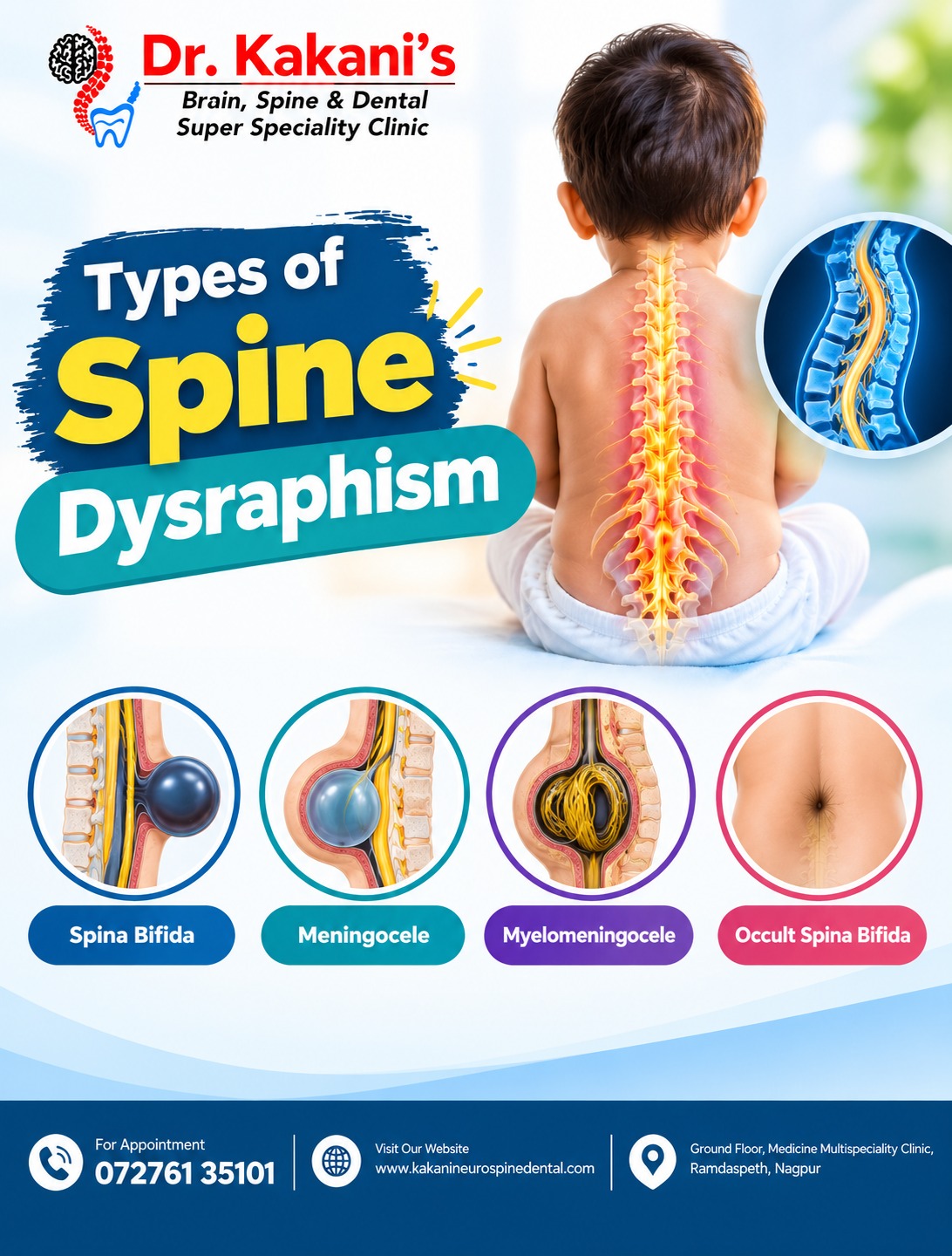
1. Spina Bifida Occulta
Spina bifida occulta is one of the mildest forms of spinal dysraphism. It occurs when one or more vertebrae do not completely close around the spinal cord.
In many cases, the spinal cord remains normal, and the condition may cause no noticeable symptoms. However, some individuals may develop back pain, weakness, sensory changes, or other neurological symptoms.
Moreover, skin findings such as a small dimple, hair patch, birthmark, or unusual skin pigmentation over the lower back may sometimes indicate an underlying spinal abnormality.
2. Meningocele
A meningocele occurs when the protective membranes surrounding the spinal cord, called the meninges, protrude through an opening in the spine.
Unlike myelomeningocele, the protruding sac usually does not contain the spinal cord itself. However, symptoms can vary depending on the location and associated spinal abnormalities.
Therefore, doctors usually evaluate a meningocele carefully using imaging and neurological assessment.
3. Myelomeningocele
Myelomeningocele is a more severe form of open spinal dysraphism and represents one of the most significant forms of spina bifida.
In this condition, a sac can contain the spinal cord and its protective tissues. As a result, affected children may experience problems such as leg weakness, reduced sensation, difficulty walking, bladder or bowel problems, and other neurological complications.
Early evaluation and appropriate treatment can help manage complications and support the child’s development.
4. Lipomyelomeningocele
Lipomyelomeningocele is a form of closed spinal dysraphism associated with fatty tissue attached to the spinal cord.
The fatty tissue can contribute to tethering of the spinal cord, which means the spinal cord may experience abnormal stretching as a child grows.
However, symptoms can develop gradually. These may include leg weakness, changes in sensation, back or leg pain, and bladder or bowel difficulties.
5. Tethered Spinal Cord
A tethered spinal cord occurs when abnormal tissue attachments restrict the normal movement of the spinal cord inside the spinal canal.
Although tethered cord can occur with several forms of spinal dysraphism, it can also become apparent later in childhood or adulthood.
Moreover, symptoms may worsen during periods of growth. Therefore, early assessment can help doctors determine whether monitoring or treatment is appropriate.
6. Dermal Sinus Tract
A dermal sinus tract is an abnormal channel that connects the skin surface with deeper spinal tissues.
A small opening, dimple, discharge, or unusual skin lesion over the spine may sometimes indicate this condition. However, not every back dimple represents spinal dysraphism.
Therefore, a specialist should evaluate suspicious skin findings, particularly when they occur alongside neurological symptoms or other abnormalities.
7. Split Cord Malformation
Split cord malformation occurs when the spinal cord divides into two sections over part of its length.
This condition can occur with other spinal abnormalities and may sometimes cause neurological symptoms, scoliosis, pain, or problems involving bladder and bowel function.
In addition, doctors may use MRI to understand the anatomy and determine the appropriate management approach.
What Causes Spinal Dysraphism?
Spinal dysraphism develops during fetal development when the neural tube and surrounding spinal structures do not form normally.
Several genetic and environmental factors may contribute to neural tube defects. However, the exact cause can differ between individuals.
Therefore, expectant mothers should discuss appropriate prenatal care and nutritional requirements with their healthcare provider.
Symptoms of Spinal Dysraphism
Symptoms depend on the type and severity of the condition. Possible signs include:
- A hairy patch over the lower back
- Unusual skin pigmentation or a birthmark
- A deep or unusual skin dimple
- A small opening or drainage from the lower back
- Back or leg pain
- Leg weakness or numbness
- Changes in walking
- Foot deformities
- Scoliosis
- Bladder or bowel problems
- Progressive neurological symptoms
However, some forms may cause no symptoms initially. As a result, a medical evaluation becomes important when concerning signs appear.
How Is Spinal Dysraphism Diagnosed?
Doctors may begin with a physical and neurological examination. Depending on the patient’s age and symptoms, they may recommend imaging tests.
MRI of the spine can provide detailed information about the spinal cord, vertebrae, nerve structures, and surrounding tissues. In some situations, doctors may use ultrasound or other imaging methods.
Moreover, the diagnostic approach depends on the suspected type of spinal dysraphism and the patient’s symptoms.
How Is Spinal Dysraphism Treated?
Treatment depends on the type of spinal dysraphism, symptoms, neurological findings, and risk of progression.
Some mild conditions may require regular monitoring rather than immediate surgery. However, certain conditions may require surgical treatment to release a tethered spinal cord, repair an open spinal defect, or address another structural abnormality.
Therefore, a neurosurgeon should evaluate each patient individually before recommending treatment.
When Should You See a Specialist?
Parents should consider specialist evaluation if a child has an unusual skin mark, hair patch, deep dimple, swelling, weakness, walking difficulties, or bladder and bowel problems associated with the lower back.
Adults with unexplained neurological symptoms or a known history of spinal dysraphism should also seek medical assessment.
Early diagnosis can help doctors monitor neurological function and determine appropriate treatment when necessary.
Consult Dr. Kakani's Clinic for Types of Spinal Dysraphism
Dr. Kakani’s Brain, Spine & Dental Super Speciality Clinic
Appointment: 07261 35101
Website: www.kakineurospinedental.com
Address: Ground Floor, Medicine Multispeciality Clinic, Ramdaspeth, Nagpur.
Frequently Asked Questions About Types of Spinal Dysraphism