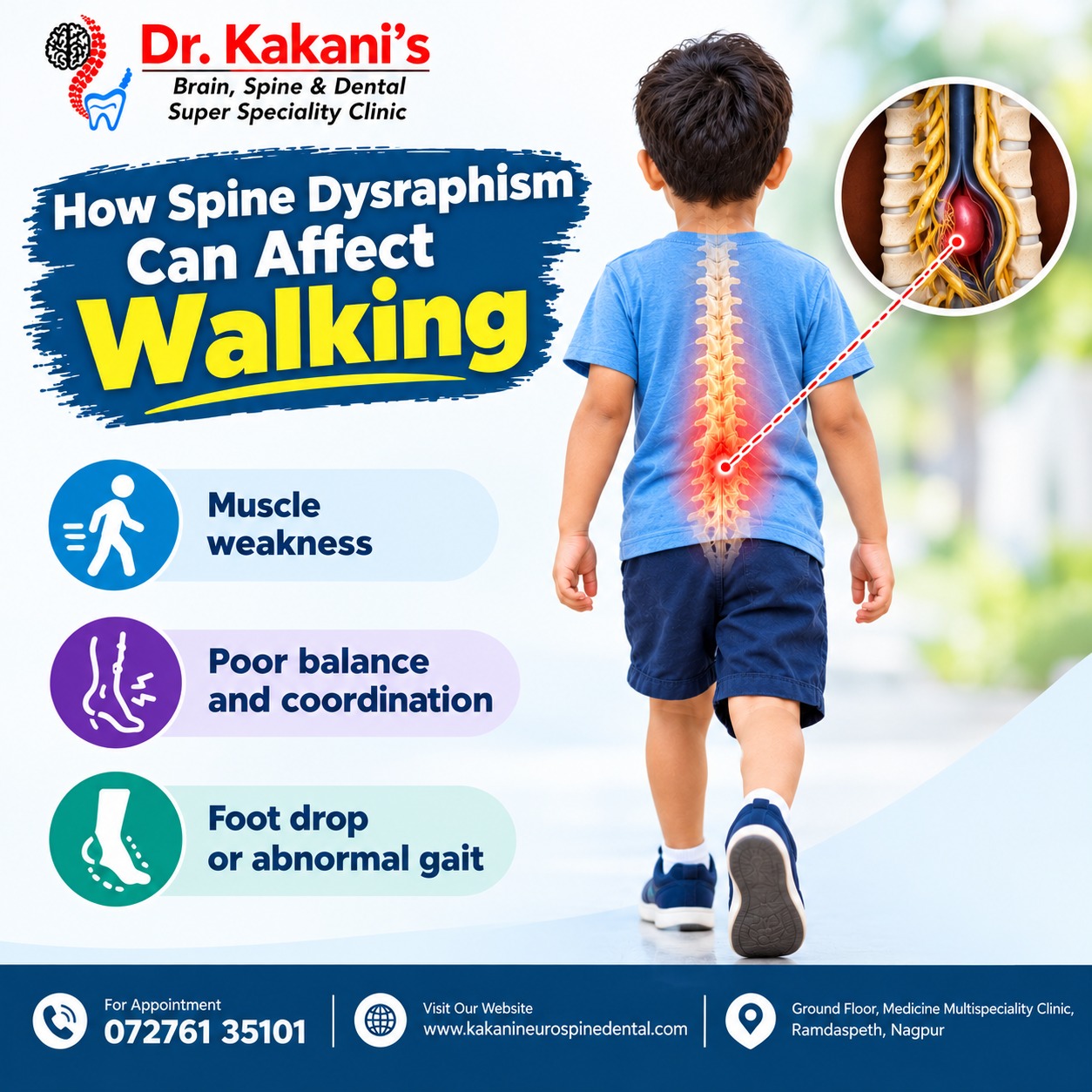
How Spine Dysraphism Can Affect Walking in Children
Spine dysraphism and walking are closely connected when a spinal condition affects the nerves responsible for leg movement, muscle control, balance, or coordination. Spine dysraphism refers to a group of congenital conditions involving abnormal development of the spine and spinal cord. Moreover, the effect on walking can vary from mild movement difficulties to significant gait problems, depending on the condition and the nerves involved.
What Is Spine Dysraphism?
Spine dysraphism is a group of conditions that develop when the spine and spinal cord do not form normally before birth. Some forms may affect the spinal cord, nerves, or surrounding tissues. Therefore, children may experience different neurological or movement-related symptoms. In addition, some children may have few noticeable symptoms, while others may develop weakness, changes in sensation, bladder or bowel problems, or difficulty walking.
How Can Spine Dysraphism Affect Walking?
Walking requires coordination between the brain, spinal cord, nerves, muscles, joints, and feet. However, spine dysraphism can affect the nerves that control the lower limbs. As a result, a child may develop changes in muscle strength, balance, coordination, or foot movement. Therefore, regular evaluation can help identify walking difficulties and guide appropriate treatment or rehabilitation.
1. Muscle Weakness
Muscle weakness can make it difficult for a child to move the legs normally. Moreover, weakness may affect one or both legs depending on the nerves involved. As a result, the child may have difficulty climbing stairs, running, standing for long periods, or maintaining a steady walking pattern.
2. Poor Balance and Coordination
Children with spine dysraphism may experience poor balance and coordination when neurological involvement affects movement control. Therefore, they may appear unsteady while walking or have difficulty changing direction. In addition, physiotherapy and appropriate rehabilitation may help improve strength, balance, and functional movement when recommended by a healthcare professional.
3. Foot Drop
Foot drop occurs when a person has difficulty lifting the front part of the foot while walking. Consequently, the toes may drag against the ground or the child may lift the knee higher to clear the foot. Therefore, early assessment can help determine the underlying neurological or muscular cause and identify suitable management options.
4. Abnormal Gait
An abnormal gait means that a child walks differently from the expected walking pattern. However, the exact pattern can vary depending on the muscles, nerves, joints, and spinal structures involved. Therefore, a specialist may assess walking, muscle strength, reflexes, sensation, posture, and coordination to understand the cause.
Symptoms Parents Should Watch For
Parents should pay attention to changes in a child’s walking pattern. Moreover, symptoms may include:
- Difficulty walking or running
- Muscle weakness in the legs
- Frequent tripping or falling
- Poor balance
- Difficulty coordinating leg movements
- Foot drop
- Toe dragging while walking
- Uneven walking pattern
- Difficulty climbing stairs
- Changes in walking ability over time
However, these symptoms can occur with several different conditions. Therefore, parents should seek professional medical evaluation rather than relying on symptoms alone.
How Is Walking Difficulty Evaluated?
A healthcare professional may perform a detailed neurological and physical examination. In addition, the assessment may include evaluation of muscle strength, reflexes, sensation, posture, balance, coordination, and gait. Depending on the child’s symptoms, the doctor may recommend imaging or other investigations to understand the spinal condition. Therefore, an individualized assessment helps determine the appropriate management plan.
Treatment and Management
Treatment depends on the type and severity of spine dysraphism and the child’s symptoms. Moreover, management may involve observation, physiotherapy, occupational therapy, orthotic support, medications for specific symptoms, or surgery in selected cases. Therefore, treatment should always follow evaluation by an appropriately qualified specialist.
When Should You Consult a Specialist?
Parents should consider medical evaluation if a child develops persistent walking difficulties, frequent falls, new weakness, foot drop, worsening balance, or a noticeable change in gait. Furthermore, sudden or rapidly worsening weakness requires prompt medical attention. Therefore, early assessment can help identify the cause and support timely management.
Frequently Asked Questions