
Dr. Kakani's Brain Spine and Dental Super Speciality Clinic

Does Every Slipped Disc Require Surgery? | Dr. Kakani

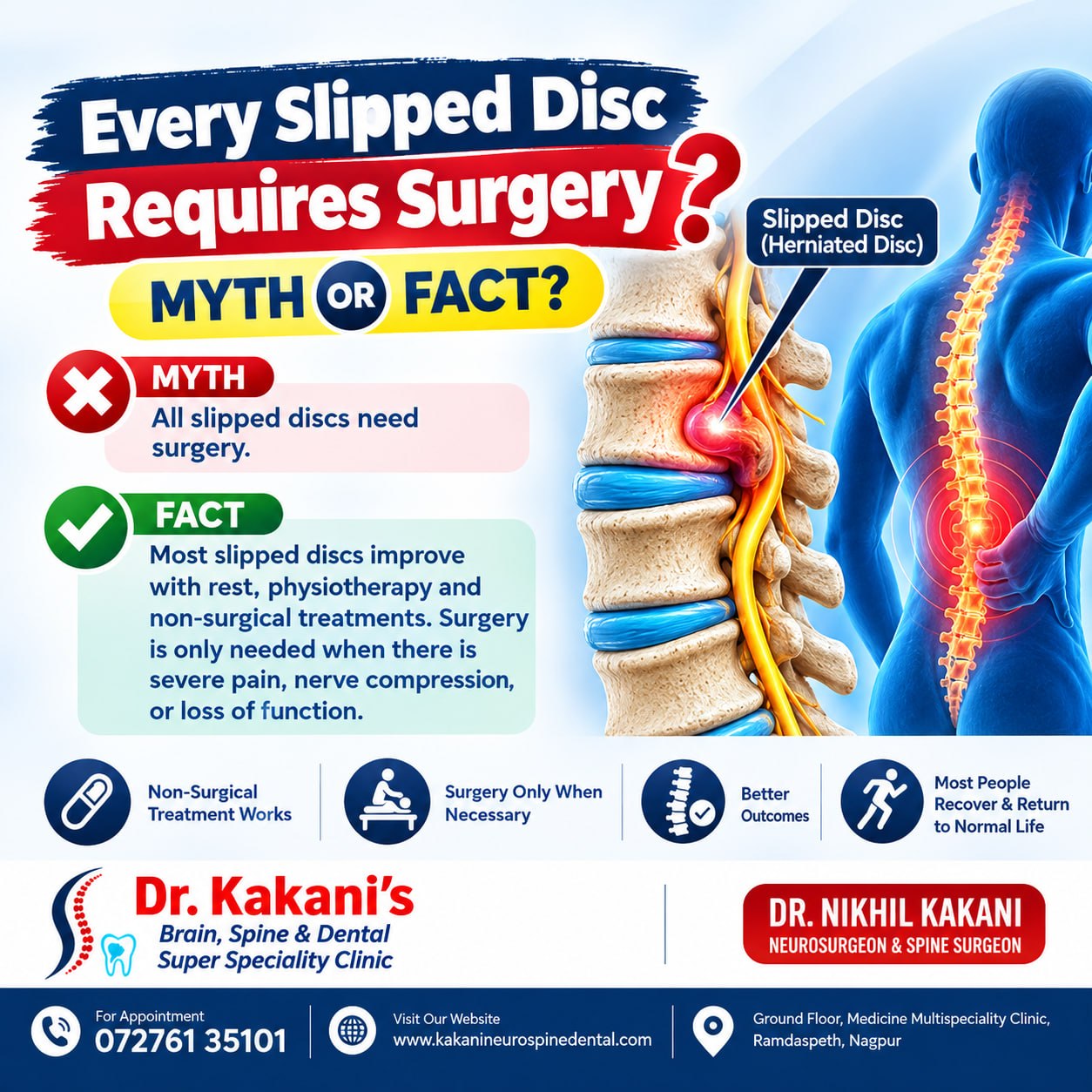
Does Every Slipped Disc Require Surgery? Myth or Fact?

A slipped disc does not automatically require surgery. In fact, many people with a herniated or slipped disc improve with conservative treatment such as appropriate activity modification, medicines and physiotherapy. Therefore, doctors usually consider the severity of symptoms, nerve involvement and response to treatment before recommending surgery.
Moreover, symptoms depend on the location of the affected disc. A disc problem in the lower back may cause pain that travels into the buttock or leg, while a cervical disc problem may cause pain or neurological symptoms involving the shoulder, arm or hand.

What Is a Slipped Disc?

A slipped disc, also called a herniated disc, occurs when the softer inner material of a spinal disc pushes through a weakened or damaged outer portion. As a result, the disc can irritate or compress nearby nerves and cause back or neck pain, numbness, tingling or weakness.

Myth: Every Slipped Disc Needs Surgery

Myth. A diagnosis of a slipped or herniated disc does not automatically mean that you need an operation. Instead, many patients initially receive non-surgical treatment. Depending on the individual condition, treatment may include medicines, physical therapy and guidance about maintaining safe activity. A doctor may also consider other treatments when appropriate.

Fact: Surgery Is Recommended in Selected Cases

Fact. Surgery may become an option when symptoms remain severe despite appropriate non-surgical treatment or when neurological problems develop. For example, doctors may consider surgery when persistent pain significantly affects daily activities, when weakness or numbness progresses, or when difficulty standing or walking develops. Therefore, a proper clinical assessment helps determine whether surgery is appropriate.

Non-Surgical Treatment for Slipped Disc

Non-surgical treatment often forms the initial approach for a herniated disc. Depending on your symptoms, a healthcare professional may recommend appropriate medicines, physical therapy and gradual return to activity. Moreover, prolonged bed rest generally does not form the routine approach to recovery.
Physical therapy can help improve movement, strengthen supporting muscles and manage symptoms. However, patients should follow exercises recommended for their specific condition rather than starting intense exercises without professional guidance.

When Does a Slipped Disc Need Surgery?

A spine specialist may discuss slipped disc surgery when conservative treatment does not adequately control symptoms or when significant nerve problems occur.

Surgery may be considered when:

  • Severe or persistent pain interferes with daily activities
  • Numbness or weakness becomes significant or progresses
  • Difficulty standing or walking develops
  • Non-surgical treatment does not provide sufficient relief
  • The disc strongly compresses a nerve and produces significant neurological symptoms

Therefore, the decision for surgery depends on your symptoms, examination findings, imaging and overall health.

When Is a Slipped Disc an Emergency?

Some symptoms require urgent medical assessment. For example, new loss of bladder or bowel control, numbness around the genital or rectal region, or significant and worsening weakness can indicate serious nerve compression. Consequently, people experiencing these symptoms should seek emergency medical attention rather than waiting for routine treatment.

How Is a Slipped Disc Diagnosed?

A doctor usually starts with your medical history and physical examination. The examination may assess muscle strength, reflexes, sensation and movement. Moreover, an MRI can provide detailed images of the spinal discs and help identify nerve compression when imaging is clinically appropriate.

Slipped Disc Surgery in Nagpur

If you have persistent back or neck pain, radiating pain, numbness or weakness, a consultation with a qualified spine specialist can help identify the cause. Dr. Nikhil Kakani, Neurosurgeon & Spine Surgeon, provides consultation at Dr. Kakani’s Brain, Spine & Dental Super Specialty Clinic, Nagpur.

The clinic is located at Ground Floor, Medicine Multispeciality Clinic, Ramdas Peth, Nagpur.

For appointments: 072761 35101

Website: www.kakanineurospinedental.com

FAQs About Sciatica

1. Does every slipped disc require surgery?
No. Many herniated discs improve with non-surgical treatment. However, surgery may be considered when symptoms remain severe, neurological problems develop or conservative treatment does not provide adequate relief.
Many patients improve without surgery. Therefore, doctors commonly consider conservative treatment first when there are no urgent neurological problems.
Surgery may be considered for persistent severe symptoms, progressive neurological weakness, difficulty walking or certain bowel and bladder problems. The exact decision requires medical evaluation.
Physiotherapy can form part of non-surgical treatment. A physiotherapist can recommend exercises and movement strategies based on your symptoms and condition.
Consult a healthcare professional if back or neck pain spreads to an arm or leg, or if you experience numbness, tingling or weakness. Furthermore, seek urgent medical attention for new bladder or bowel problems or significant worsening weakness.
Call Now Button