
- September 29, 2026
- DrnikhilK
- 11:16 am
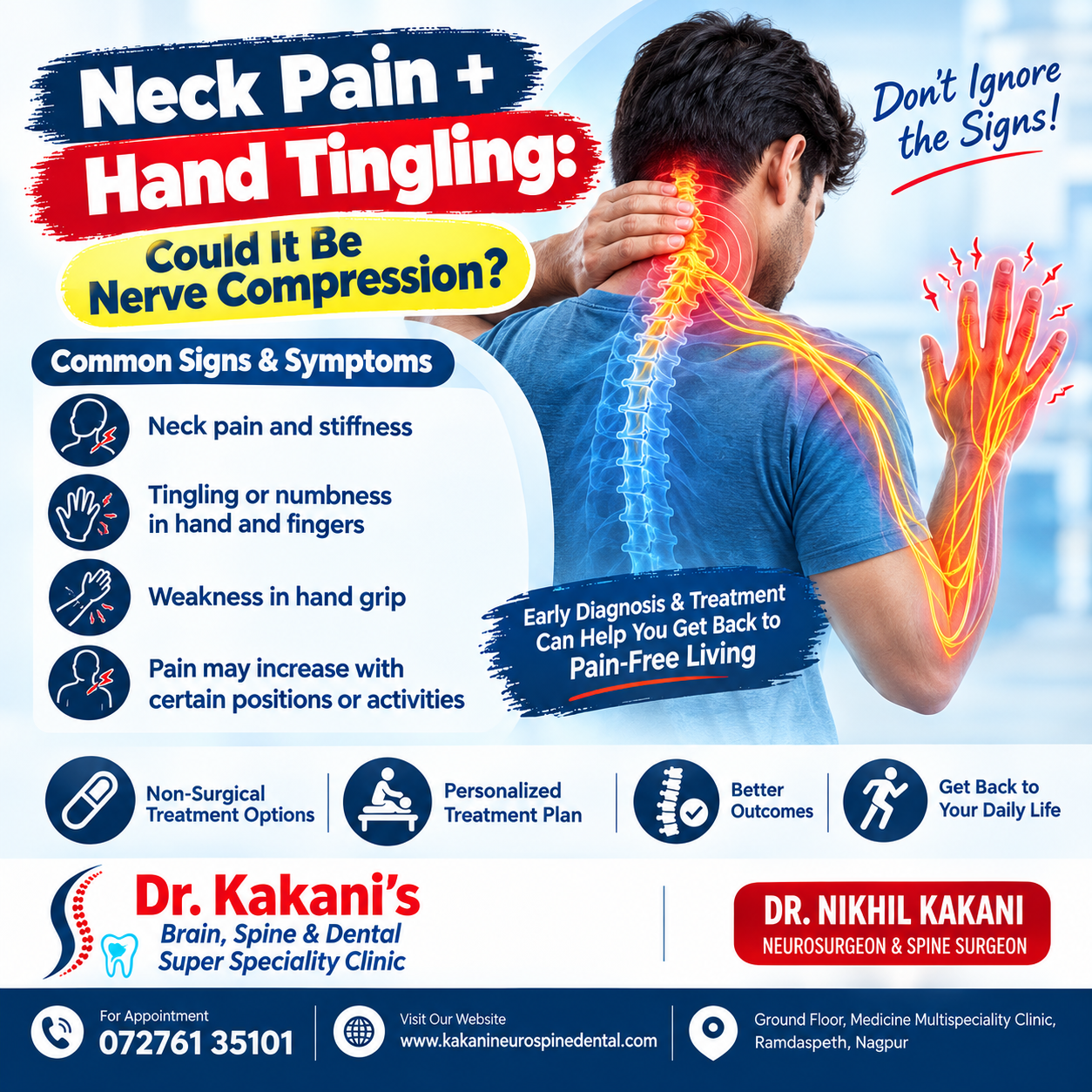
Neck Pain and Hand Tingling: Could It Be Cervical Nerve Compression?
Are you experiencing persistent neck pain, tingling in your fingers, or numbness in your hands? Do you feel weakness in your hand grip or discomfort that travels from your neck to your shoulder and arm?
These symptoms may be associated with cervical radiculopathy, a condition in which a nerve root in the neck becomes irritated or compressed.
What Is Cervical Nerve Compression?
Common Symptoms of Neck Pain and Nerve Compression
Cervical nerve compression can cause different symptoms depending on the nerve involved.
1. Neck Pain and Stiffness
You may experience discomfort, tightness, or stiffness in the neck. Certain neck movements may increase the pain.
2. Tingling or Numbness in the Hands and Fingers
A compressed nerve may cause a pins-and-needles sensation, reduced sensation, or numbness that travels down the arm into the hand and fingers.
3. Weakness in Hand Grip
Some people experience weakness in the hand, wrist, or arm. This may make it difficult to hold objects, open containers, or perform everyday tasks.
4. Pain Radiating to the Shoulder or Arm
Pain may begin in the neck and travel toward the shoulder, arm, or hand. It can feel sharp, burning, or electric in nature.
5. Pain That Increases With Certain Movements
Turning, extending, or straining the neck may aggravate symptoms in some people with cervical nerve irritation.
What Causes Cervical Nerve Compression?
Several conditions can irritate or compress the nerves in the cervical spine.
Herniated or Slipped Disc
A cervical disc may bulge or herniate, putting pressure on a nearby nerve root and causing pain or sensory changes in the arm.
Cervical Spondylosis
Age-related changes in the cervical spine, including bone spurs and disc degeneration, may narrow the space through which nerves exit and lead to nerve compression.
Narrowing of the Nerve Opening
The openings through which spinal nerves pass may become narrowed, a condition called foraminal stenosis. This can place pressure on a nerve root.
Neck Injury
An injury involving the neck may affect spinal discs, joints, or surrounding structures and sometimes lead to nerve irritation.
The underlying cause can vary, so a clinical evaluation is important before deciding on treatment.
How Is Cervical Nerve Compression Diagnosed?
A doctor may use a combination of medical history, physical examination, and diagnostic tests to identify the cause of neck pain and hand tingling.
Common diagnostic methods include:
Physical examination: Checking neck movement, muscle strength, sensation, and reflexes.
MRI of the cervical spine: May help identify disc herniation, narrowing, or nerve compression when imaging is clinically indicated.
X-ray: May be used to assess the alignment and bony structures of the cervical spine.
EMG and nerve conduction studies: May help distinguish cervical nerve root problems from other nerve conditions when needed.
Not every patient requires all these tests. The choice depends on symptoms and examination findings.
Treatment Options for Cervical Nerve Compression
Treatment depends on the underlying cause, the severity of symptoms, and whether there is any neurological weakness.
1. Non-Surgical Treatment
Many people with cervical radiculopathy improve with non-surgical treatment.
Physiotherapy and guided neck exercises.
Posture and activity modifications.
Appropriate medication prescribed by a healthcare professional.
Selected injection-based treatments when indicated.
The goal is to reduce pain, improve movement, and support recovery while monitoring nerve function.
2. Personalized Physiotherapy
A physiotherapist may recommend exercises to improve neck mobility, strengthen supporting muscles, and address posture-related factors.
The exercise plan should be tailored to the patient’s symptoms and clinical condition.
3. Surgical Treatment
Surgery may be considered when symptoms remain severe despite appropriate non-surgical treatment or when there is significant or worsening neurological weakness.
The procedure depends on the location and cause of the nerve compression. Not everyone with cervical nerve compression requires surgery.
Can Neck Pain and Hand Tingling Be Prevented?
Not all cases of cervical nerve compression can be prevented, but certain habits may help support neck and spine health.
Maintain a comfortable posture while working at a desk.
Keep your screen at a suitable height to avoid prolonged neck bending.
Take regular breaks from prolonged sitting.
Stay physically active and follow an appropriate exercise routine.
Avoid sudden neck movements and activities that aggravate symptoms.
Seek medical advice if numbness, pain, or weakness persists.
When Should You See a Spine Specialist?
Consider consulting a healthcare professional if you experience:
Persistent neck pain that radiates into the arm.
Recurrent tingling or numbness in the hands or fingers.
Weakness in your hand grip or arm.
Difficulty performing everyday activities because of neck or arm pain.
Symptoms that are worsening or not improving.
Seek urgent medical attention if you develop new or worsening weakness, difficulty walking or maintaining balance, loss of hand coordination, or new bladder or bowel control problems. These symptoms may indicate spinal cord involvement or another serious condition.
Consult Dr. Kakani's Clinic for Spine Care in Nagpur
Dr. Kakani’s Brain, Spine & Dental Super Speciality Clinic
Spine care and evaluation for back pain and nerve-related symptoms
Appointment: 07261 35101
Website: www.kakineurospinedental.com
Address: Ground Floor, Medicine Multispeciality Clinic, Ramdaspeth, Nagpur.